Robinhood Chain Could Be the Next Big L2. Here's How to Use it.
By Pratik Bhuyan Updated July 14, 2026

Summary
- Robinhood Chain has launched with impressive momentum and quickly become one of the busiest blockchains by DEX trading volume.
- Robinhood Wallet offers the simplest way to access the chain while other EVM wallets are also fully supported.
- Users can bridge assets through the native bridge or use aggregators for faster and more flexible transfers.
Introduction
When Robinhood flipped the switch on its own blockchain at a London keynote on July 1, most of crypto Twitter treated it as another corporate app-chain that would launch empty and stay that way. Eight days later Robinhood Chain was doing around $433 million in 24-hour DEX volume, which put it fifth among all chains on DeFiLlama and, briefly, ahead of Hyperliquid.
Whether this pace will hold or not is something we will see with time. But, the setup is still hard to ignore: a broker with nearly 28M funded accounts now controls the rails underneath tokenized stocks, stablecoin yield, and AI-driven trading.
If you want to be early to whatever this becomes, the two things worth understanding are how to get a wallet that talks to the chain and how to actually bridge your funds over. The bridging part is where most people trip, so let's take a closer look at that.
Getting Started with Robinhood Wallet
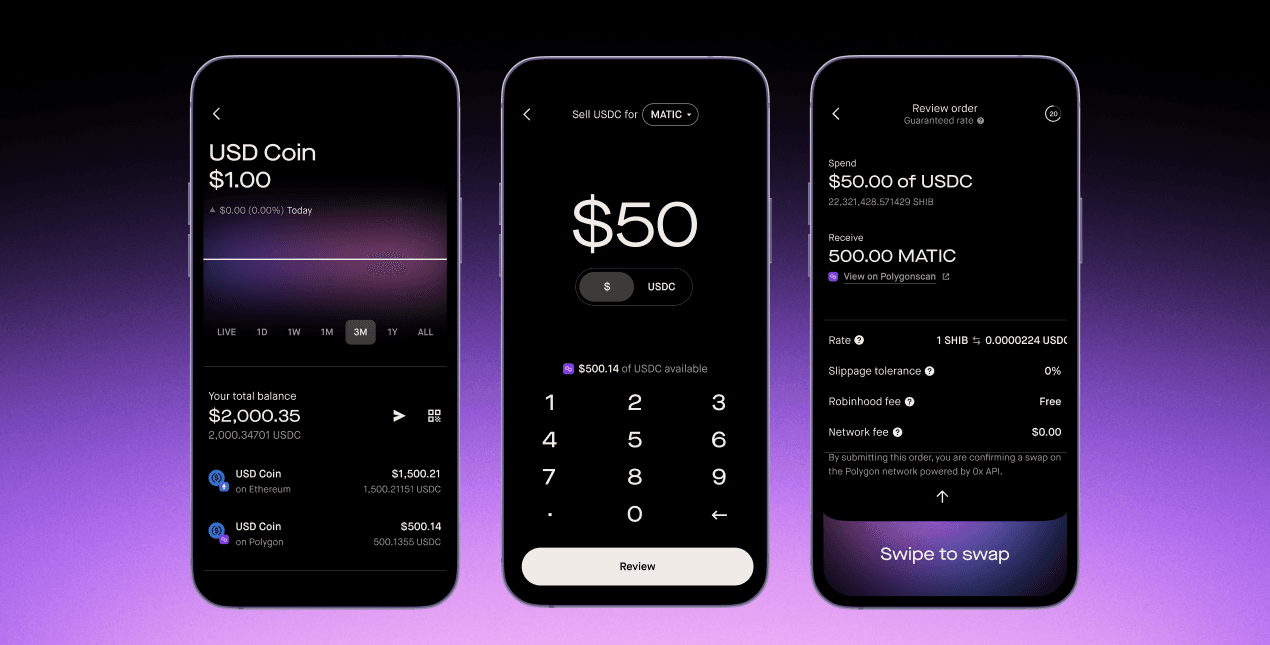
The easiest way to access Robinhood Chain is through Robinhood Wallet, the company's self-custodial crypto wallet available on both iOS and Android. Unlike the main Robinhood investing app, Robinhood Wallet gives users complete ownership of their private keys, so that's a thumbs up.
Heads-up for Solana users:
Existing Solana users don't necessarily need to download Robinhood Wallet to experience the new ecosystem. Pump.fun now supports Robinhood Chain, allowing users to create an EVM wallet directly within Pump.fun and start trading Robinhood-native memecoins. While this won't give you access to every app on the chain, it's arguably the quickest way to get exposure to the ecosystem before exploring the broader wallet and bridging experience.
If you prefer another wallet, that's perfectly fine too. Robinhood Chain is fully EVM compatible (built on Arbitrum), meaning MetaMask, Phantom, Rabby, and other Ethereum wallets can connect by simply adding the network manually.
Pro Info: The Robinhood Chain uses ETH as its native gas token and operates under Chain ID 4663.
RPC URL https://rpc.robinhoodchain.com
Block Explorer https://explorer.robinhoodchain.com
How to Bridge Assets to Robinhood Chain?
The simplest route, if you're already inside the Robinhood ecosystem, is to buy crypto in the main app and move it onchain through Robinhood Wallet, since the wallet supports the network natively and you skip third-party bridges entirely. For everyone bringing funds from elsewhere, you've got two families of bridges to pick from, and they pull in opposite directions on the trust-versus-speed tradeoff.
At the center is the canonical bridge, which is the native trustless bridge between Ethereum and Robinhood Chain. Deposits from L1 to L2 usually confirm within about 10 minutes and run through Arbitrum's retryable ticket system, so ETH and ERC-20s move over without you handing custody to anyone.
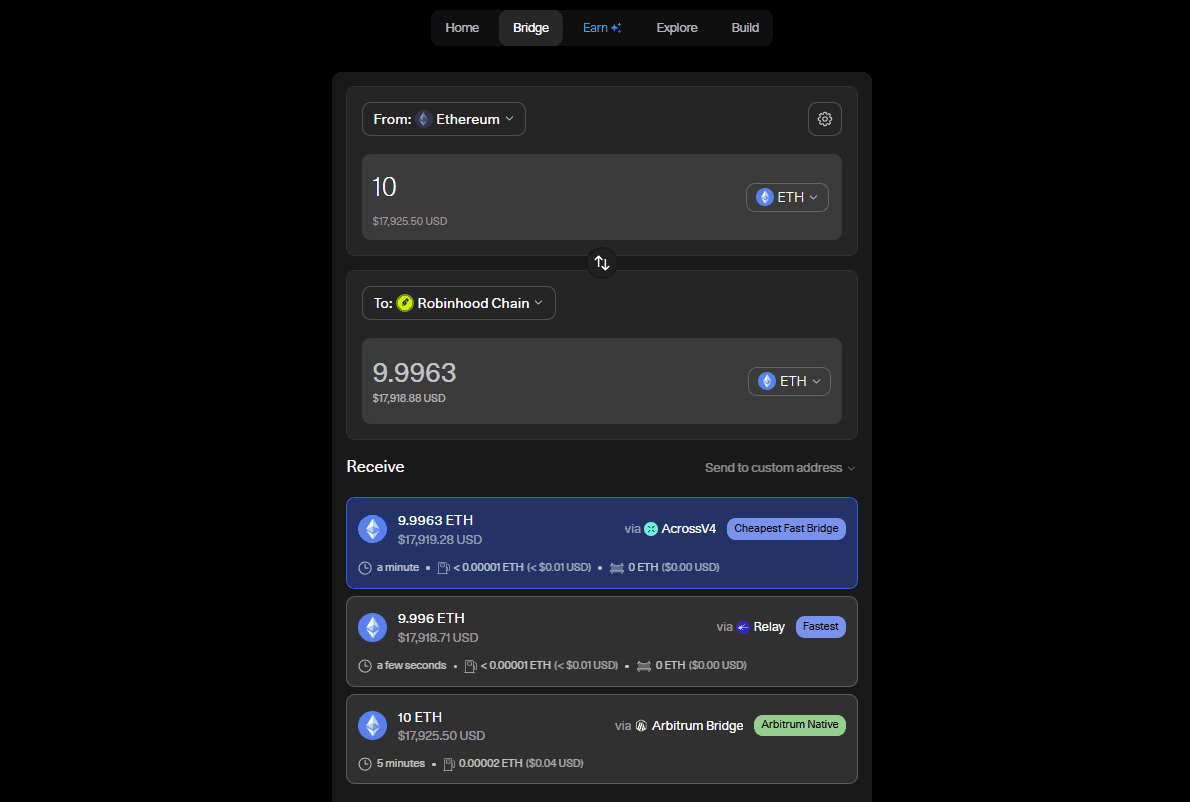
The catch is on the way out: withdrawals back to Ethereum have to sit through Arbitrum's seven-day challenge period, which is standard for the fraud-proof model, and then require a final claim transaction on L1 that costs its own gas. That's fine if you're parking capital, and annoying if you want to move quickly, which is exactly why most people use an aggregator to exit.
Robinhood Chain also supports LayerZero and Stargate, making omnichain token transfers significantly easier for supported assets. Developers and advanced users have another option through Chainlink CCIP, which extends bridging beyond simple token transfers. For example, a transfer could bridge a stablecoin onto Robinhood Chain while automatically depositing those funds into a lending protocol after arrival, reducing multiple manual transactions into a single workflow.
Pro Tip: If you don't want to choose between multiple bridges, you can also rely on bridge aggregators such as LI.FI and 0x, which automatically determine the most efficient route available.
What's Actually on the Chain Once You're There
The reward for bridging over is a stack that already has liquidity in it. Uniswap runs the main public AMM, Morpho lending sits behind the 7% USDG yield through Robinhood Earn, and Lighter handles perpetual futures.
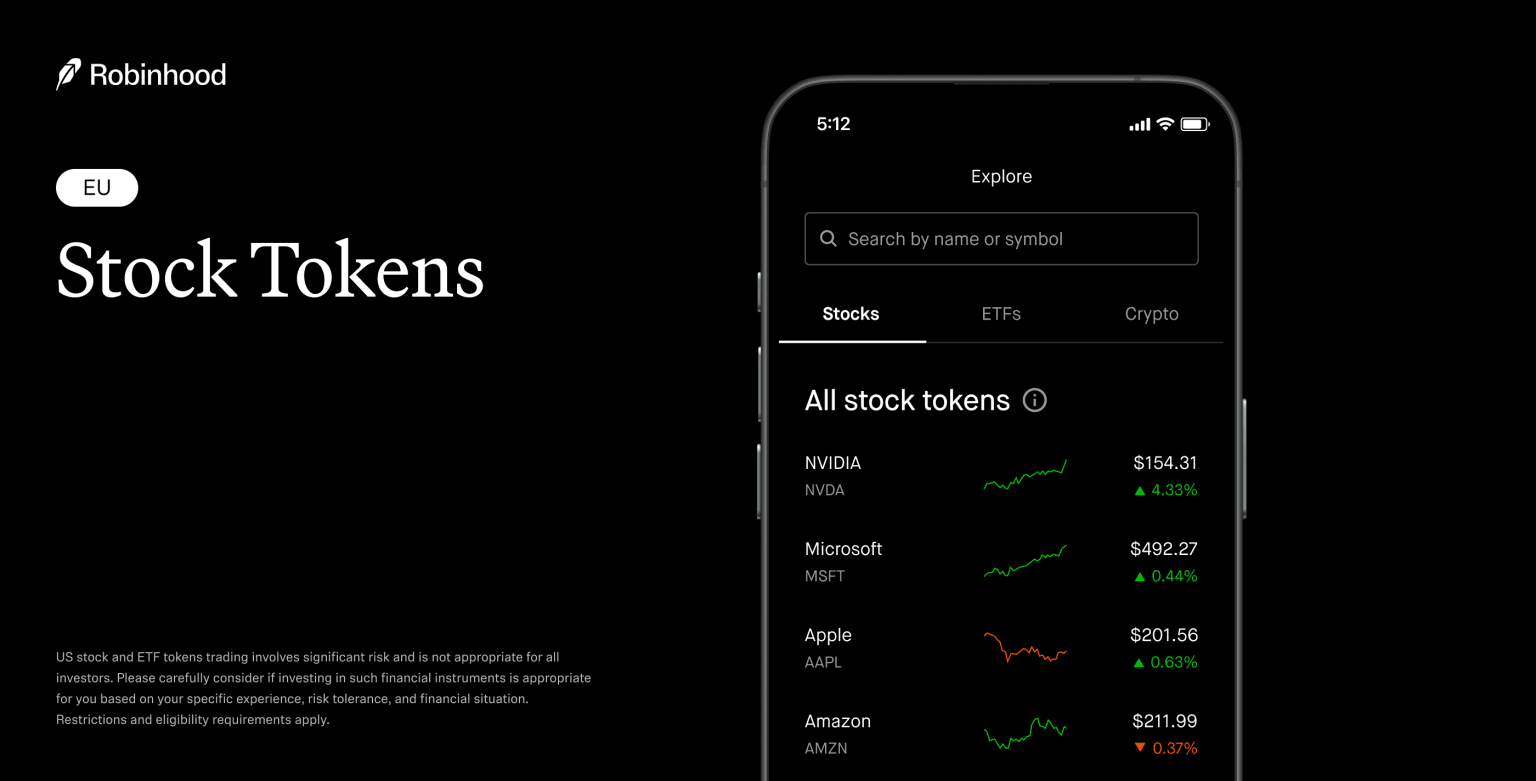
Tokenized stocks are the marquee draw if you're in an eligible region, letting you hold tokenized NVDA or AAPL exposure around the clock and post it as onchain collateral, though you'll want to confirm availability where you are before moving funds to trade them. Also, if you're into memecoins, the Pump.fun integration is live on the chain, making it easier to discover and trade new token launches.
Bottom Line
Robinhood Chain does look promising and holds potential with its growing userbase. The chain has already launched with an ecosystem that includes infrastructure providers such as Alchemy, Chainlink, Fireblocks, BitGo, and Paxos, alongside DeFi protocols including Uniswap, Morpho, Lighter, and Arcus.
Whether tokenized equities and real-world assets become crypto's biggest growth sector remains to be seen, but momentum is clearly building. For anyone interested in where institutional crypto adoption is heading next, Robinhood Chain is one ecosystem that's difficult to ignore.
If you found this helpful, don't miss our latest article on two promising AI crypto projects that could follow in the footsteps of $VVV!
Also, The Beluga Brief breaks down moves like this every week, for free. Subscribe and stay ahead of the next chain launch.
Join the Beluga Brief
Dive deep into weekly insights, analysis, and strategies tailored to you, empowering you to navigate the volatile crypto markets with confidence.
Never be the last to know
and follow us on X