Could These be the Next $VVV? Two AI Coins Flying Under the Radar
By Pratik Bhuyan Updated July 8, 2026

Summary
- Unlike many AI narrative plays, both tokens have clear utility through governance, staking, payments & ecosystem participation.
- Bio Protocol is building AI-powered infrastructure for DeSci while Gensyn is creating a decentralized marketplace for AI compute.
- Both BIO and AI have relatively modest valuations compared to leading AI tokens, leaving meaningful room for growth.
Introduction
Venice AI's token did the thing most AI coins only promise. VVV went from roughly $3 in June 2025 to an all-time high above $20 by mid-2026, a run of more than 500% in a year that pushed its market cap past $620M.
Founder Erik Voorhees (the same person behind ShapeShift) built it on three things that were boring individually and combustible together: a product people actually paid for, a token supply that shrank as usage grew, and a spot in the AI narrative right as the market decided AI was the trade!
That formula is repeatable, and right now two tokens are running it while most people aren't watching. Bio Protocol ($BIO) and Gensyn ($AI), both sitting under $70M in market cap, operate in completely different segments of AI - yet both are building infrastructure that could become increasingly valuable as AI adoption accelerates.
Bio Protocol: Liquidity Layer for DeSci?
Most crypto investors have heard of DeFi, DePIN and AI. Much fewer have explored DeSci, or decentralized science. That is exactly where Bio Protocol sits.
Instead of funding the next memecoin or trading protocol, Bio Protocol is trying to solve one of the biggest inefficiencies in scientific research. Early-stage biotech projects often struggle to raise capital because funding is concentrated among governments, universities and traditional venture firms. Bio Protocol wants to open that process to anyone through blockchain.
Researchers can launch scientific initiatives called BioDAOs, raise funding from a global community, and allow token holders to participate in governance and capital allocation. But unlike traditional research grants, Bio Protocol also creates a liquidity layer around these projects. Scientific discoveries and intellectual property can be tokenized, allowing BioDAOs to issue tradable tokens tied to their research portfolios. This gives early backers a way to buy, sell or hold exposure to promising scientific breakthroughs, while proceeds from licensing or commercializing that IP can flow back into the BioDAO treasury to fund future research.
Already, the protocol has helped fund projects across longevity research, rare diseases and AI-driven drug discovery, with more than $33 million committed across ecosystem projects according to the team. That alone makes Bio Protocol interesting, but the AI angle is becoming even stronger.
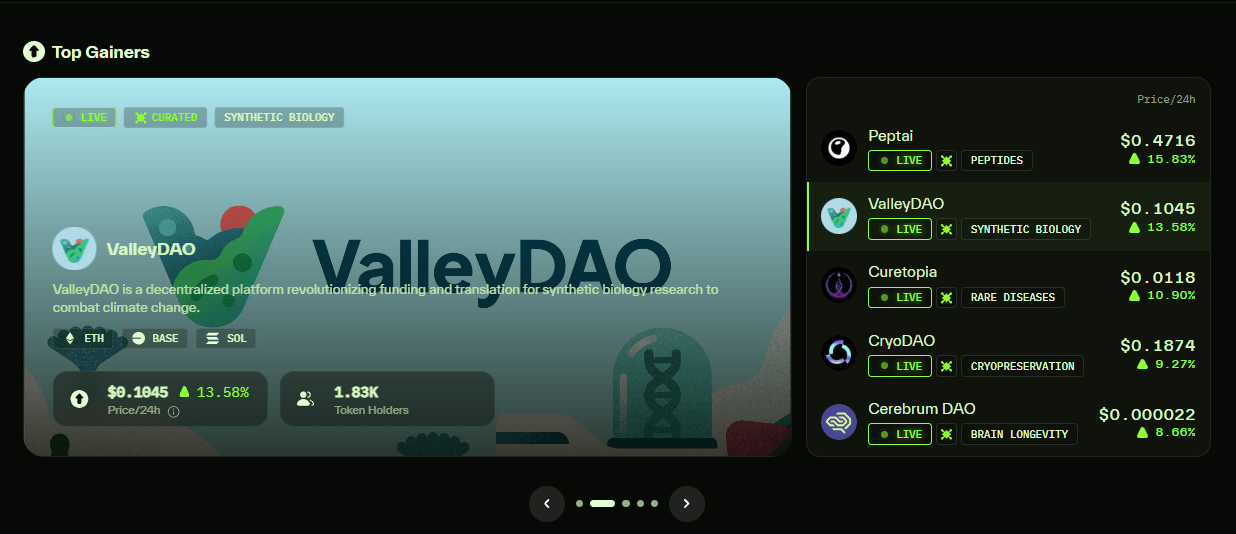
The project recently introduced OpenLabs, an AI-powered research environment designed to help scientists collaborate, develop research proposals and coordinate funding through AI-assisted workflows. Instead of simply funding science, Bio Protocol is gradually becoming an AI-enabled operating system for decentralized research.
Another reason investors are beginning to pay attention is valuation. At the time of writing, BIO carries a market capitalization of roughly $65 to $70 million, placing it well below many AI tokens that have already reached several hundred million dollars or even multi-billion dollar valuations.
That obviously does not guarantee upside, but it does mean that if decentralized science continues becoming part of the broader AI narrative, BIO has considerably more room to grow than many of today's established leaders.
Gensyn: The Compute Layer AI Actually Needs
If Bio Protocol focuses on scientific research, Gensyn is tackling an even larger bottleneck. AI models require enormous amounts of compute to train. Today, that compute is largely controlled by centralized cloud providers with expensive GPU infrastructure. Gensyn wants to decentralize that entire process.
Its network allows anyone with spare GPU resources to contribute compute power while developers can access distributed hardware for AI training without depending entirely on centralized providers. You can think of it as an open marketplace for AI computation.
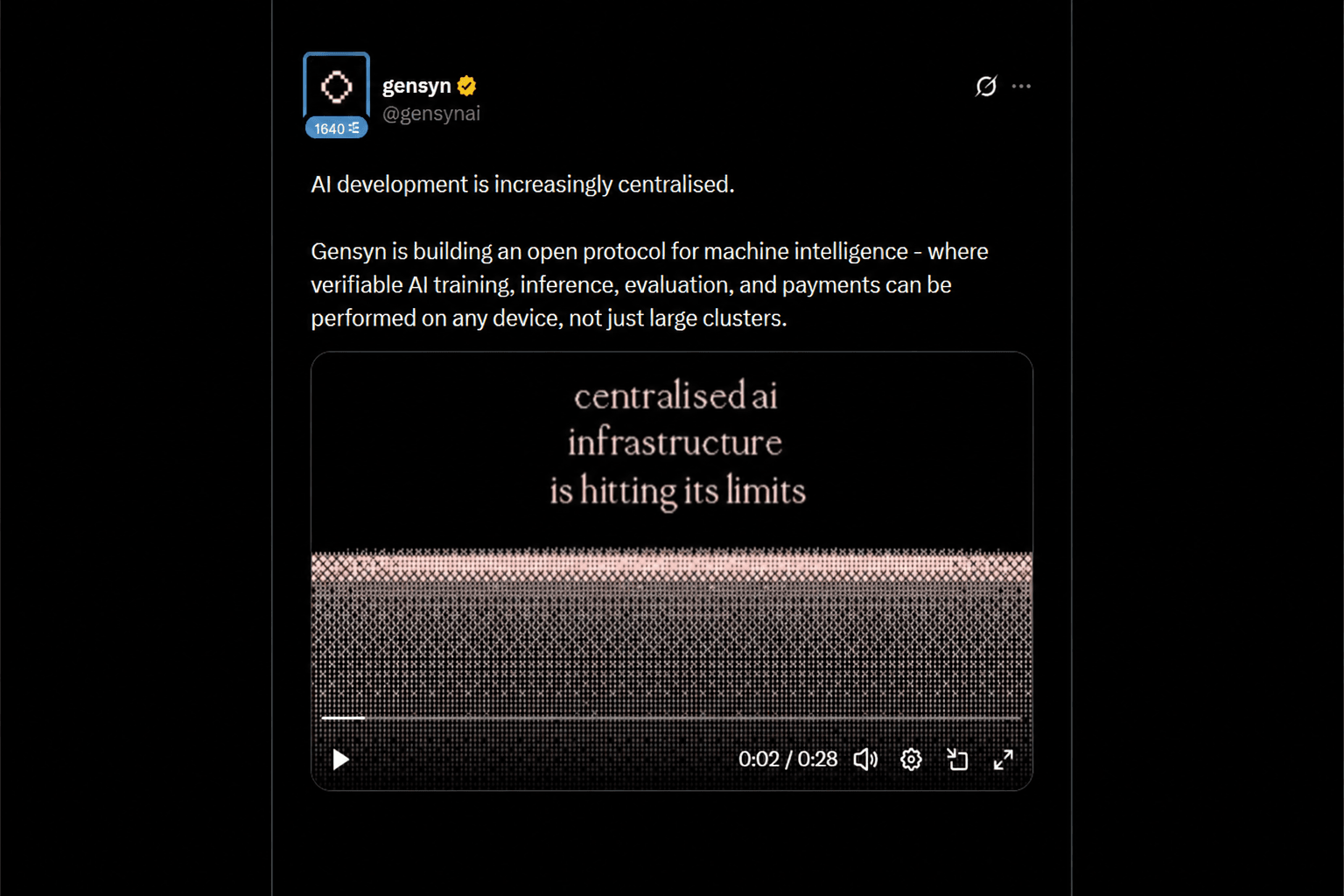
That problem has become increasingly important as AI models continue growing larger while GPU shortages remain a recurring issue across the industry. Instead of spending billions building data centers, Gensyn aims to coordinate existing idle hardware across thousands of participants.
The recently launched $AI token sits at the center of this economy. It is used for payments between participants, staking, network security and coordinating incentives across the decentralized compute marketplace. This is remarkably similar to what made projects like Render and Akash successful during previous AI cycles.
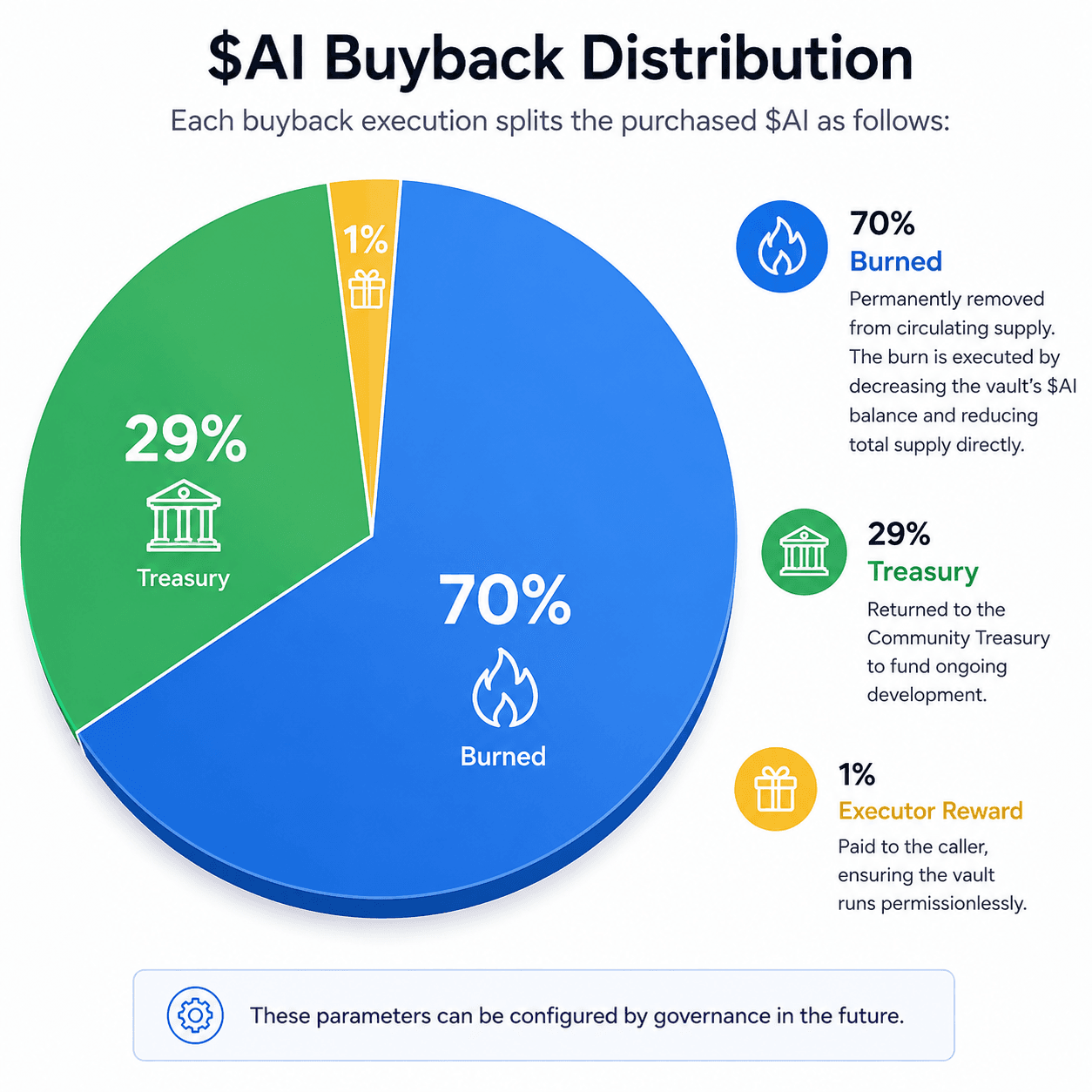
What's interesting is how they have structured their $AI buyback execution. Here's a quick look at their distribution:
Why They Might be the Next AI Gems
Protocols like Venice and Virtuals succeeded because they solved a genuine infrastructure problem. Instead of launching another chatbot, they created an ecosystem where AI agents could actually operate, transact and generate economic activity. For example, Venice's VVV token, became the economic layer of the ecosystem, with developers using it to launch agents, access protocol services, participate in governance and align incentives across the network. No wonder why VVV ranks among the best-performing tokens this year, with real ecosystem utility & adoption.
Both BIO and Gensyn share that same philosophy. Neither project is trying to build the next AI assistant. Bio Protocol is building infrastructure for scientific funding and AI-assisted research. Gensyn is building infrastructure for decentralized AI training. Infrastructure has historically produced some of crypto's largest winners because every application built on top creates additional demand for the underlying network.
That does not mean either project will become the next VVV. Crypto markets rarely reward narratives alone, and execution will ultimately determine whether these ecosystems succeed. Every project in Web3 has its own risk, and for $BIO & $AI, neither deserves investment purely because it's an AI play.
But when searching for AI tokens that combine real utility, relatively modest valuations and exposure to rapidly growing markets, both BIO and Gensyn deserve far more attention than they're currently receiving. If the AI narrative continues to lead this cycle, these are the kinds of projects that could surprise the market. 👀
If you liked this, check out our deep dive on Venice AI and the agentic economy forming around tokens like VVV.
Want more calls like this before they run? The Beluga Brief drops the alpha in your inbox for free.
Join the Beluga Brief
Dive deep into weekly insights, analysis, and strategies tailored to you, empowering you to navigate the volatile crypto markets with confidence.
Never be the last to know
and follow us on X