This New App Is Giving Hyperliquid Some Serious...‘Fomo’
By Pratik Bhuyan Updated August 13, 2026

Summary
- Fomo is challenging traditional crypto trading by combining social discovery and trading into one consumer-friendly app
- Its rapid growth and recent revenue flip against Hyperliquid show the potential of social first crypto trading
- High fees and reliability issues remain key challenges Fomo needs to solve as it scales
Introduction
Hyperliquid has basically spent the last couple of years becoming the exchange everyone in crypto loves to compare themselves against. It built one of the biggest onchain perps markets out there, turned HYPE into one of the standout tokens of the cycle, and set the standard for what a serious onchain trading platform is supposed to look like.
But, that argument is being tested right now by a 15-month-old mobile app with 17 employees, no token, and a social feed.
Fomo, a social-first trading app that only launched in 2025, recently appeared to flip Hyperliquid in 24-hour revenue generation. The moment was picked up across Crypto Twitter, and while it would be wrong to interpret that as Fomo suddenly becoming bigger than Hyperliquid, the underlying trend is difficult to ignore.
There is an even more interesting twist here. Fomo's perpetuals product is partly powered by Hyperliquid itself. Read on to know more..
What Fomo is doing right
Crypto has spent years improving the backend while largely ignoring the front end. There are hundreds of protocols competing over liquidity, execution and fees, but most still expect users to understand how the underlying infrastructure works.
Fomo is betting that the next wave of users doesn't want to understand any of that. They just want to open an app, see what people are trading and make a trade.
The product is essentially a social trading layer wrapped around crypto trading. Instead of forcing users to understand wallets, bridges, different chains and multiple trading interfaces, Fomo tries to make the whole experience feel more like a consumer app.
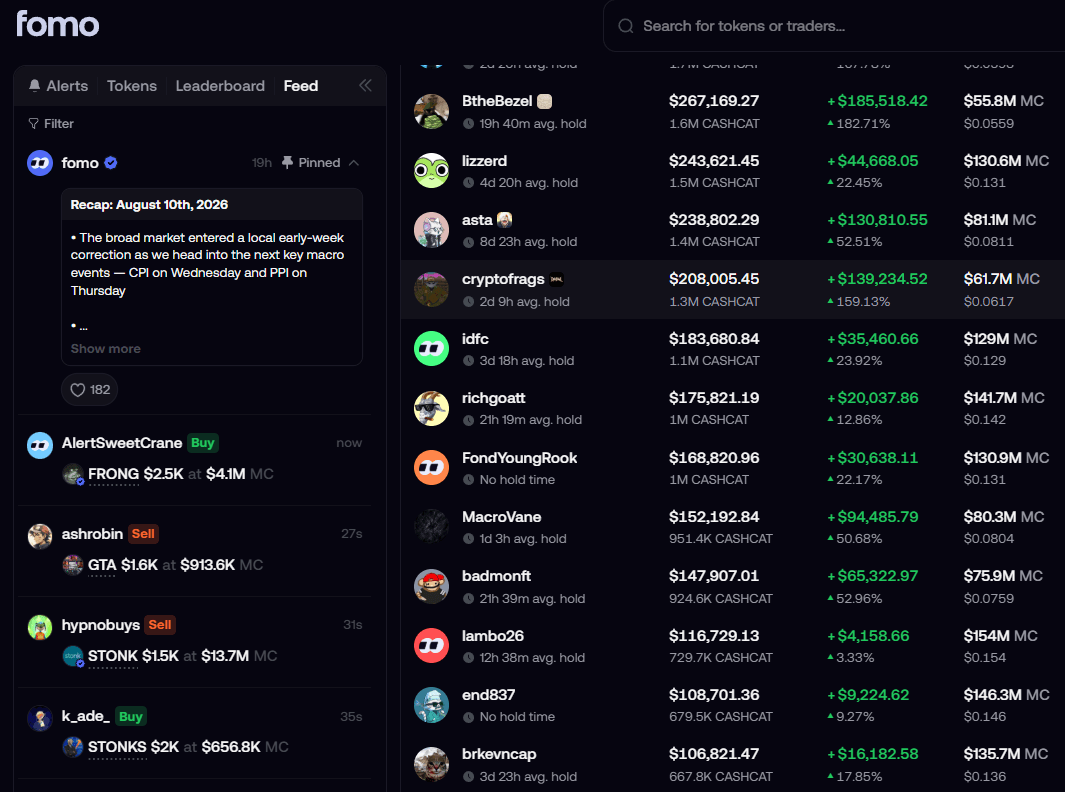
Users can discover tokens through a social feed, see what other traders are buying, follow wallets, share positions, participate in leaderboards and copy trades. Read our detailed coverage on Fomo app here.
And the growth has been surprisingly fast
Fomo's numbers explain why investors are taking the company seriously.
The platform raised $75 million in Series B funding in June, led by Index Ventures with participation from Union Square Ventures and Benchmark. The round valued the company at roughly $550 million. At the time, Fomo said it had surpassed 625,000 users, processed more than $4 billion in trading volume and generated more than 110 million social interactions.
Those numbers are particularly interesting considering Fomo is still a relatively young platform. Hyperliquid has its own share of numbers that would make almost any Web3 product look small, but what’s interesting here is that a meme-focused trading app is starting to challenge it.
And the real winner for Fomo is..
The biggest reason Fomo has come this far is that it puts trading and discovery in the same place.
Think about how most people currently discover a crypto trade. They might see a post on X, jump into Telegram, check a chart on another platform, open a DEX, connect a wallet and finally execute the trade.
Fomo is compressing that entire process into one application.
You see the trade, you see who made it, you can inspect the wallet, you can follow the trader and, if you want, you can make the same trade. That creates a feedback loop that traditional exchanges don't really have.
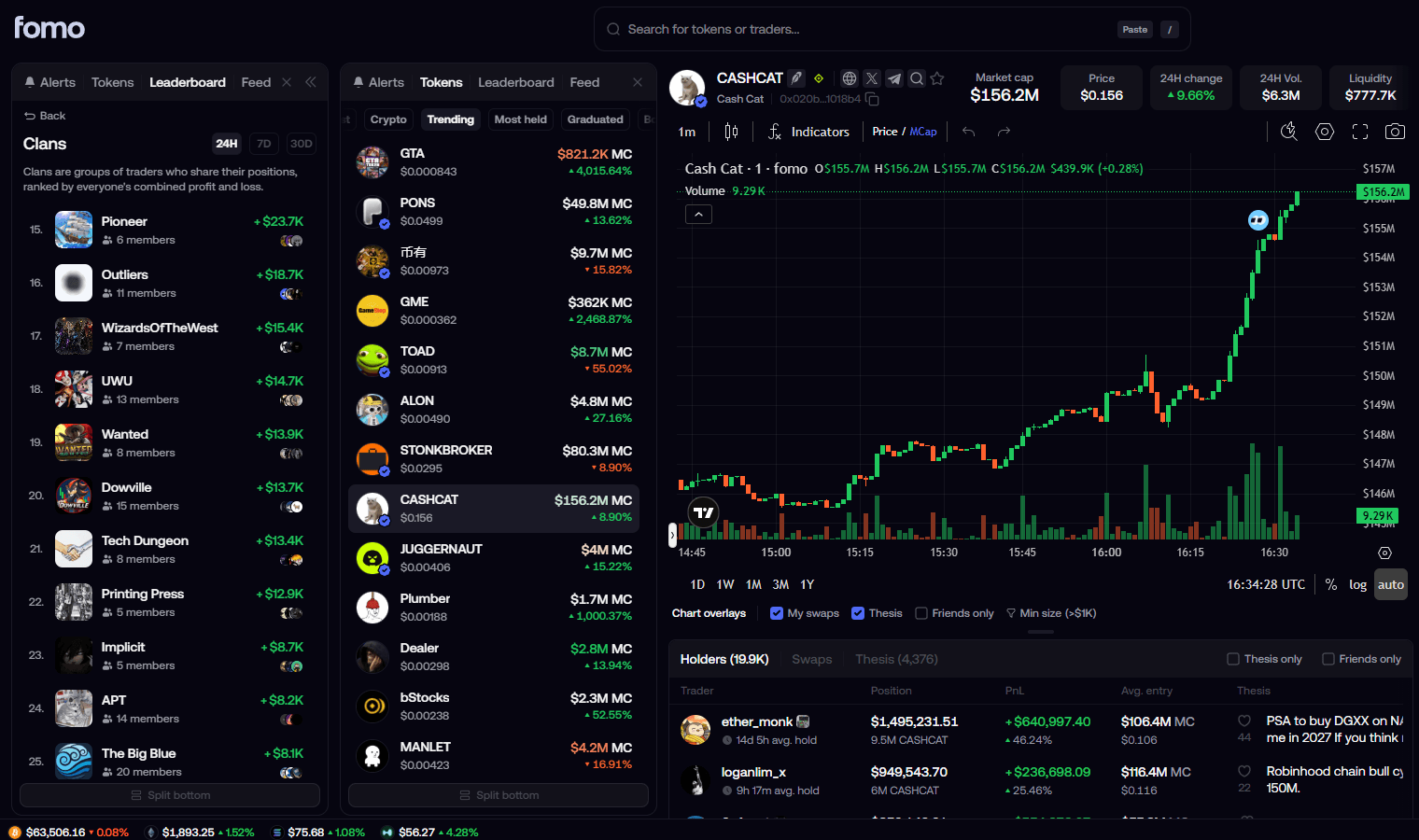
More traders create more activity. More activity creates more social content. More content gives users more things to discover. More discovery creates more trades. And unlike a traditional exchange, Fomo can potentially turn the traders themselves into its distribution network.
And we think, this is a powerful model, especially in a market where social media has always played an outsized role in deciding what gets attention.
Fomo still has some problems to fix
For all the hype, the product isn't perfect. One of the biggest complaints around Fomo has been its fees. The platform currently charges a 0.5% transaction fee on regular trades, which can become expensive for active traders.
For a casual trader who values convenience, that premium may be acceptable. But for someone executing dozens of trades, the economics look very different.
The other concern is reliability. Fomo has had user complaints around downtime and availability, which is something the company will need to take seriously as it moves deeper into leveraged trading.
Wrapping it up
The recent revenue flip makes for a great headline, but it needs context. Fomo is not remotely the same size as Hyperliquid yet. Its revenue is still driven primarily by its Solana spot trading business, while its perpetuals business is a relatively new addition. Recent data also shows that Fomo's Hyperliquid perp builder revenue represents only a small portion of its overall revenue.
Like Robinhood Chain, which is just a month old, has been clearing more than $600M in daily DEX volume on memecoin trading and by some measures now draws more daily speculative activity than Hyperliquid.
But putting all of that aside, if Fomo continues to grow, expands into more markets, and addresses the fee and reliability issues holding it back, its competitive relationship with Hyperliquid could get very interesting. And if that happens, Hyperliquid might have a very good reason to start fomoing.
Want more info like this directly in your inbox? Subscribe to The Beluga Brief where we break down such trends and a whole lot more!
Join the Beluga Brief
Dive deep into weekly insights, analysis, and strategies tailored to you, empowering you to navigate the volatile crypto markets with confidence.
Never be the last to know
and follow us on X