If You Think Telegram Is Just a Messaging App, Think Again
Telegram has always made it easy to send messages, photos, videos and files to anyone around the world. Now, it is making a case for something bigger: sending money should be just as easy.

Introduction
Telegram has always made it easy to send messages, photos, videos and files to anyone around the world. Now, it is making a case for something bigger: sending money should be just as easy.
With the launch of its native Money wallet, Telegram is bringing cryptocurrency transfers directly into the messaging experience. Users can send GRAM to other Telegram users or compatible crypto wallets, without relying on the traditional banking system to process the blockchain transfer.
Meet Telegram Money, the wallet built into your chats
Telegram Money is a native, non-custodial crypto wallet built on The Open Network (TON). It is separate from Walt, the service formerly known as Telegram Wallet, which continues to operate as a broader crypto platform.
The new Money wallet is designed to make holding and transferring crypto feel like a regular part of using Telegram. It is accessible through Telegram's Settings menu, with a GRAM transfer option also available from the attachment menu in one-to-one chats.
Access is still rolling out account by account, so the feature may not appear for every user yet.
The non-custodial design is important, too. Users control their wallet through cryptographic keys and a recovery phrase rather than simply relying on a company to hold a balance on their behalf. Telegram offers an encrypted cloud backup option, but users still need to protect their recovery credentials.
So, what exactly are Grams?
GRAM is the native cryptocurrency of the TON blockchain.
There is one recent change worth knowing about. On June 15, 2026, TON's native token was renamed from Toncoin (TON) to Gram (GRAM) following a community vote. The blockchain itself remains TON, and existing balances were renamed automatically. There was no new token issuance or swap required.
GRAM is used to transfer value on the network and pay blockchain transaction fees when those fees are not sponsored. It is a cryptocurrency, though, not a stablecoin. Its market price can fluctuate, which matters when someone is using it to send money rather than to trade.
How do you buy and send GRAM?
Getting started is relatively straightforward, although the available purchase methods depend on your account, location and the wallet version you can access.
Buying GRAM: If a Buy or Fund option is available in your wallet, follow the in-app purchase flow. Card purchases may be handled by third-party payment providers, which set their own fees, limits and verification requirements. Another option is to buy GRAM through a supported exchange or compatible TON wallet and transfer it into your Money wallet using the receiving address shown in the app. Always check that you are using the correct network.
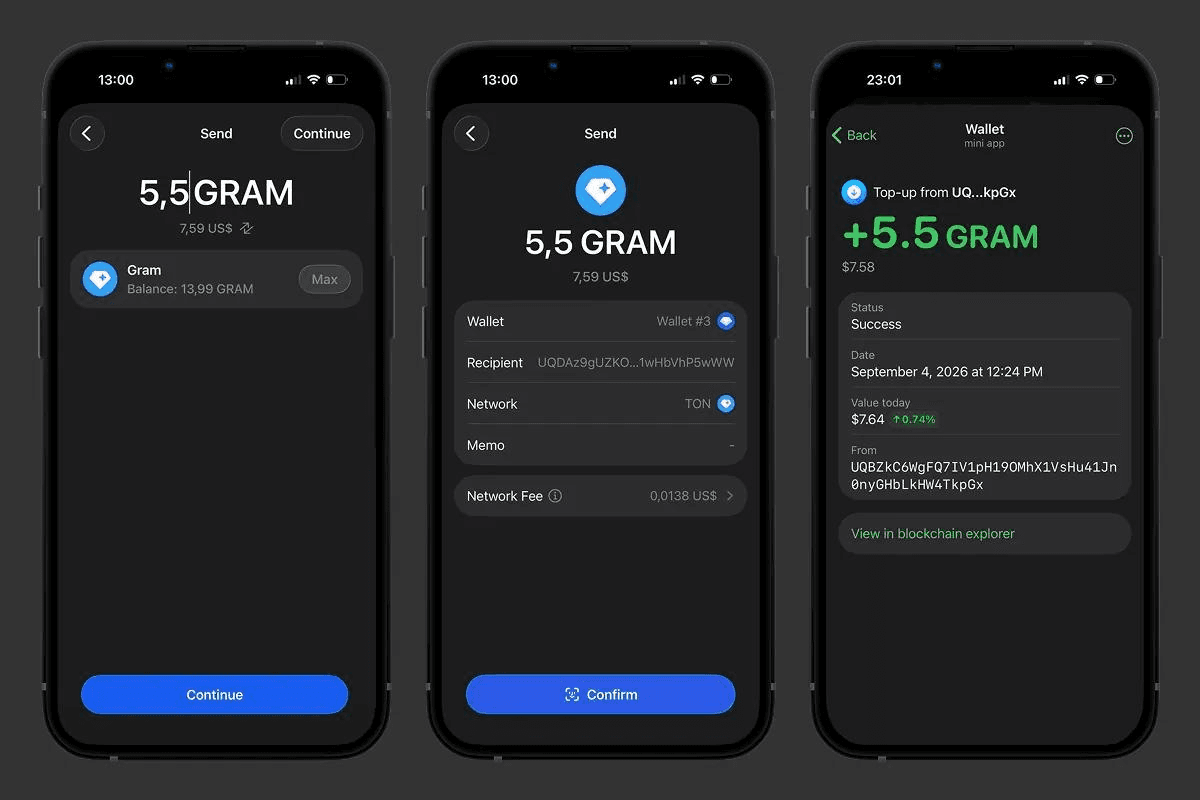
Sending GRAM: Open a one-to-one chat, tap the attachment menu and choose the Money or GRAM transfer option. Enter the amount, review the details and confirm the transaction. For a compatible external wallet, you can use the recipient's wallet address instead.
The transfer then runs on TON and can typically settle within seconds. The recipient does not need to use the same bank, payment provider or country-specific payment network as the sender. They need access to a compatible wallet and a way to use or convert the funds if they want local currency.
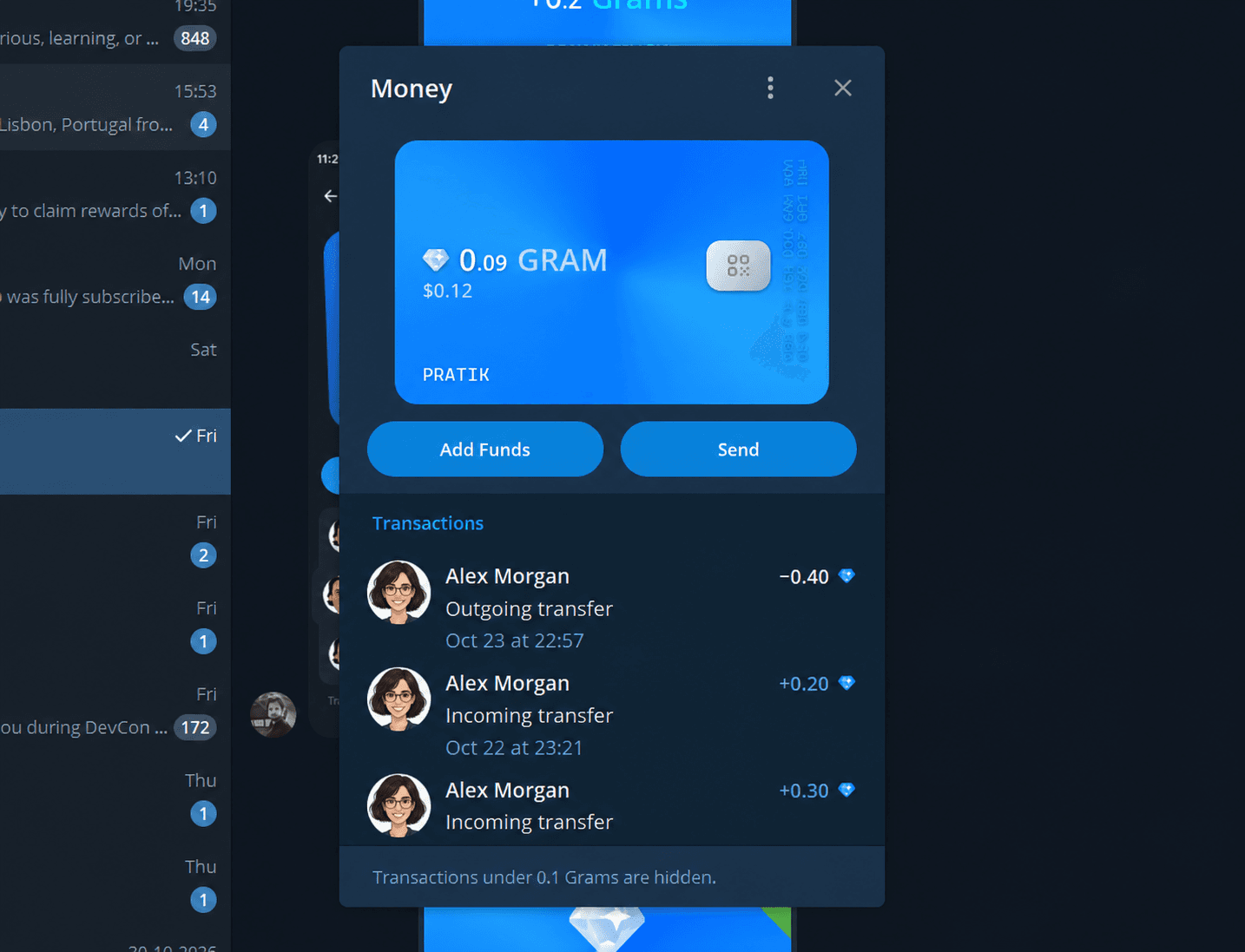
That is what makes the experience interesting. You can be chatting with someone on the other side of the world and send them crypto from the same conversation, instead of switching between a messaging app, a banking app and a separate transfer service.
Not just payments, use your GRAMS for other stuff
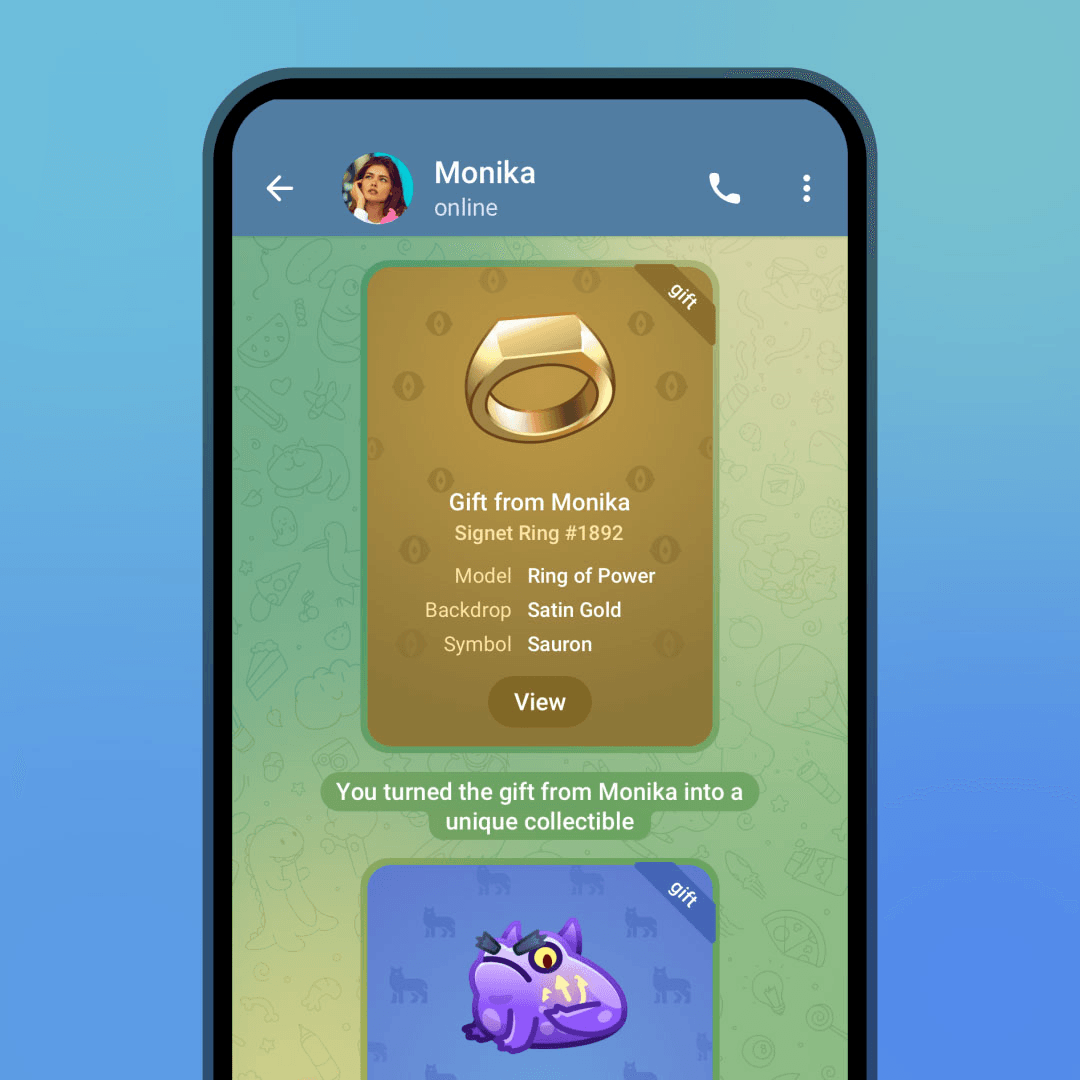
Telegram's Money isn't limited to moving GRAM between users. It can also be used to buy gifts and collectible usernames.
Telegram's gifts ecosystem has developed into more than a way to send a small digital present. Certain gifts can be upgraded into collectibles, transferred to other users or sold through supported marketplaces. Collectible usernames, meanwhile, can function as desirable digital identities within Telegram's ecosystem.
This creates a potential demand sink for GRAM: users may acquire the token not only to transfer it to someone else, but also to spend it on items and digital assets they actually want.
But what's the catch?
Telegram is currently covering the blockchain network fees for up to five transfers per day through gasless transactions. In other words, the wallet can arrange for the network fee to be paid without deducting it from the user's transfer in the usual way.
Also, free transfers do not automatically mean free payments at every stage. Buying GRAM with a bank card, exchanging it for another asset or converting it back into local currency may involve separate provider fees, spreads or identity checks.
Still, subsidising routine transfers is a smart way to make blockchain payments feel less intimidating. Most people do not want to learn about gas fees before sending a friend some money.
This is the kind of problem Bitcoin was created to solve
Bitcoin's original white paper described a system for peer-to-peer electronic cash, allowing value to move between people without needing a financial institution to process every payment.
Telegram Money brings that broad idea into a familiar consumer experience. The blockchain handles the transfer, while Telegram provides the interface where people already communicate.
That distinction matters. Crypto has spent years building networks capable of transferring value globally, but using them often requires downloading a wallet, understanding addresses, managing network fees and learning unfamiliar interfaces.
The bigger picture
Telegram's Money wallet is interesting because it brings a blockchain payment mechanism into an application people already use every day.
WhatsApp, a Telegram competitor, already lets Indian users send money through UPI, which transfers funds directly between bank accounts. But it's still limited to domestic transfers and relies on traditional payment infrastructure.
Telegram Money's bigger bet is that the messaging app itself can become a gateway to a global financial network.
It is still early, and access, fees and real-world cash-out options will determine how useful the wallet becomes. But the direction is clear: messaging, money and crypto are starting to share the same interface.
And if Telegram gets the experience right, the next time someone says, "I'll send you the money," they might not mean opening a banking app at all.
Want more info like this directly in your inbox? Subscribe to The Beluga Brief where we break down such trends and a whole lot more!
Never be the last to know
and follow us on X
Related Articles
All articles
AERO vs UNI: Is DeFi's Next DEX Battle Going Multichain?
Aero is betting on multichain expansion while Uniswap aims to capture more trades through aggregation
5 Types of Crypto Traders: Which One Are You?
There are many different types of traders. Which one are you?
Solana Is Winning the Meme War, But Ethereum Is Winning the Utility War
While Solana captures attention, Ethereum is building a strong case for becoming the financial infrastructure on which traditional markets move onchain.

5 Big Reasons Why We're Bullish on Ethereum
Ethereum remains the leading smart contract blockchain despite years of so called Ethereum killers.
Everyone Thinks Ethereum Is Dead. Here's What They Missed
Ethereum's fundamentals remain strong, with unmatched decentralization, billions staked, and the largest DeFi ecosystem in crypto.

Here's How You Can Invest in Anthropic Even If You're Not a VC
Hyperliquid lets traders speculate on Anthropic’s implied valuation without owning its private shares