AERO vs UNI: Is DeFi's Next DEX Battle Going Multichain?
Aero is betting on multichain expansion while Uniswap aims to capture more trades through aggregation
Introduction
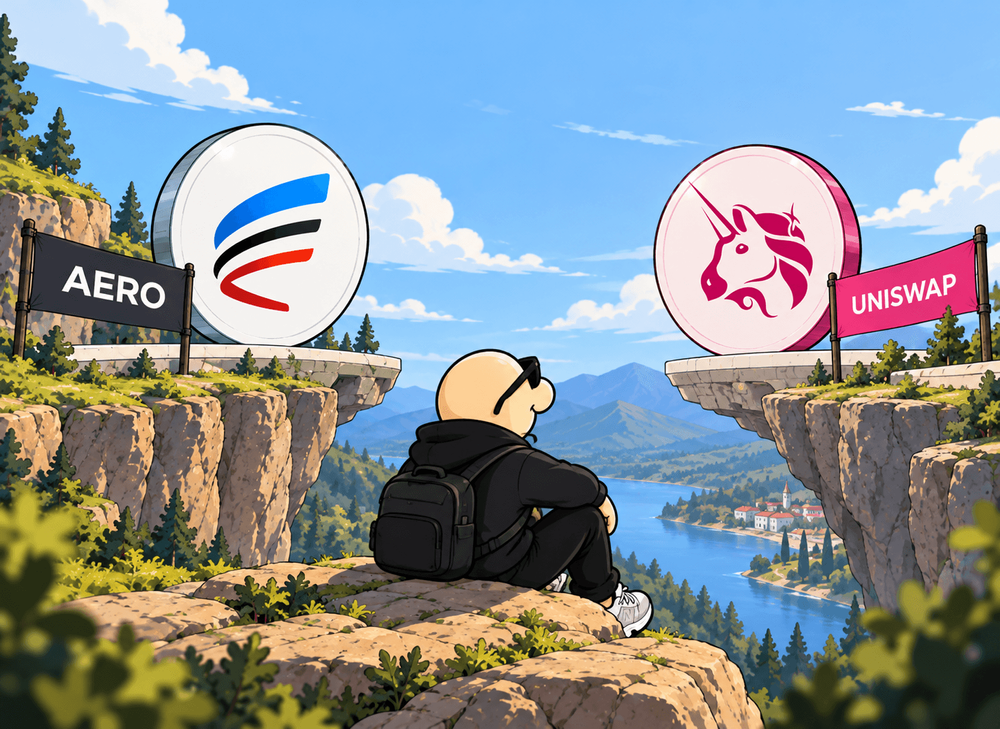
Two of crypto's biggest decentralized exchange rivals just made moves that put them on a more direct collision course.
On October 21, Aerodrome and Velodrome merged to launch Aero, a unified spot exchange spanning seven blockchain networks. Hours later, Uniswap announced that its v4 protocol was becoming an aggregator, bringing liquidity from external platforms directly into its trading experience.
Both moves point toward the same opportunity: capturing more of the trades happening across DeFi. But Aero and Uniswap are taking different routes to get there.
Aero's Big Move: From Base to Seven Chains
Aerodrome has been one of the biggest DeFi success stories on Base. According to figures cited at launch, it accounted for 58% of Base's DEX trading volume in Q3 2026. Velodrome held a similarly strong position on OP Mainnet, accounting for 60% of DEX volume there.
Now, the two platforms have joined forces under the Aero brand.
The new exchange launched across Ethereum, Base, Robinhood Chain, Ink, OP Mainnet, Arc and Arbitrum. That's a significant expansion from Aerodrome's Base-focused roots and Velodrome's presence on Optimism.
The main attraction is Metaswaps, a feature designed to let users swap assets across supported networks using existing onchain liquidity.

Aero is also changing how liquidity incentives work. Its Predictive Allocation system allows staked AERO holders to direct rewards toward markets they believe will generate trading activity. Those stakers can also earn a share of exchange revenue.
The idea is straightforward: expand beyond Base, attract more trading activity and give AERO holders a financial incentive to help build liquidity across the network.
Aero says its seven launch networks collectively handle around $120 billion in monthly DEX trading volume, giving it a much larger market to target.
Uniswap's Response: Bring the Competition Inside
Uniswap's announcement on October 22 was just as interesting.
Uniswap v4 is now an aggregator. Its new Aggregator Hooks wrap external liquidity sources and make them accessible as Uniswap v4 pools.
The feature launched on Ethereum mainnet, Base and Robinhood Chain, with seven external liquidity sources available at launch. Uniswap says those sources cover more than 90% of DEX activity across the supported networks.
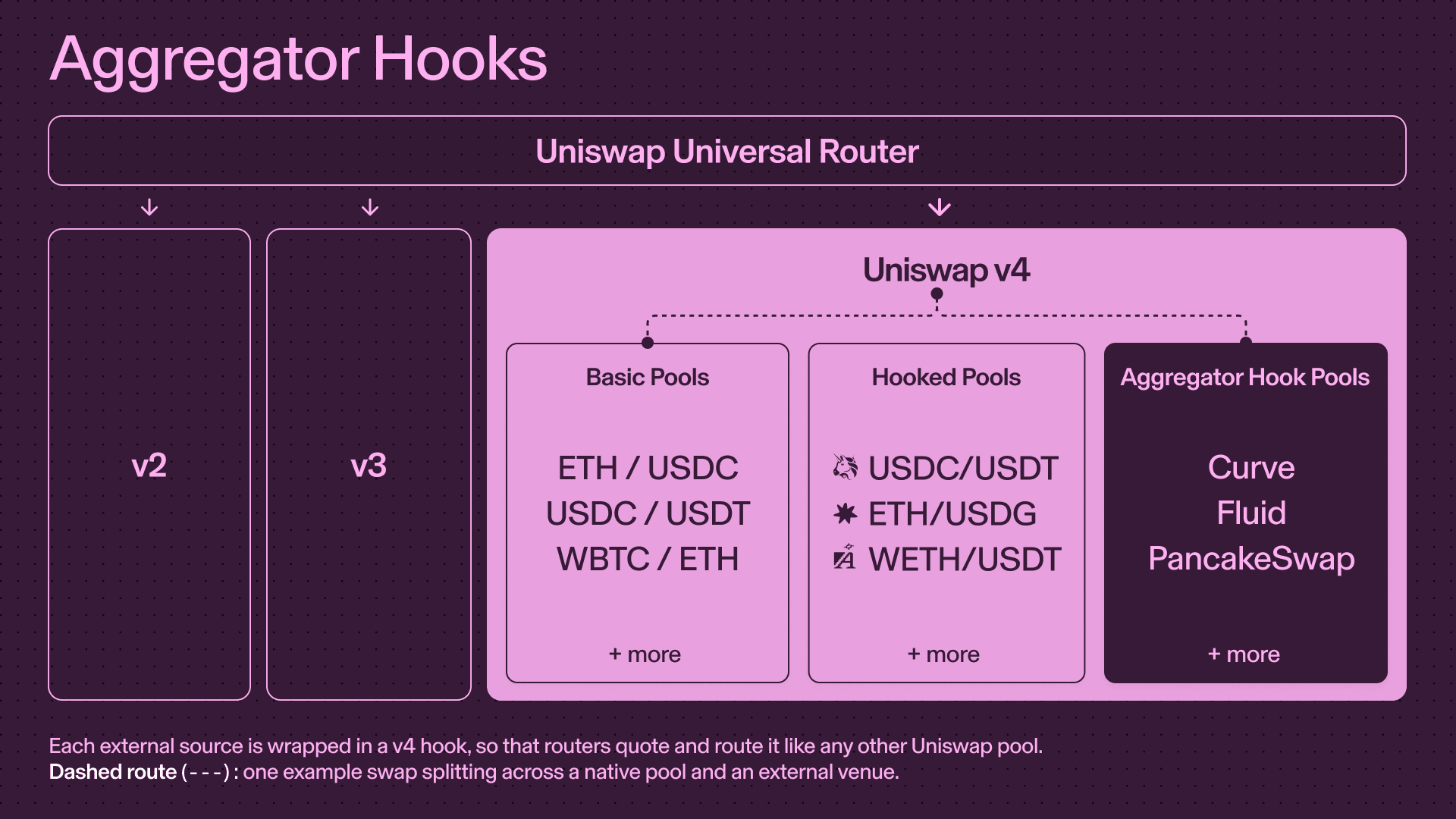
There's a token angle, too. Trades routed through external liquidity sources pay Uniswap protocol fees, contributing to UNI burns.
That gives Uniswap a way to capture value from liquidity it doesn't directly control. Rather than expecting every trade to happen in its own pools, it can use external liquidity to improve execution and potentially generate more protocol fees.
AERO vs UNI: Which Token Will Outperform?
Both platforms want to become the place where users trade, but their strategies aren't identical.
Both exchanges are expanding their reach, but the bigger question for investors is which token stands to benefit more.
AERO is our pick for potential upside. The reason comes down to three things: multichain expansion, token value accrual and valuation.
Aero has just expanded across seven networks, combining Aerodrome's dominance on Base with Velodrome's position on OP Mainnet. Before the merger, the two platforms accounted for 58% of Base's DEX volume and 60% of OP Mainnet's DEX volume in Q3 2026, respectively. The combined platform now has a much larger market to target.
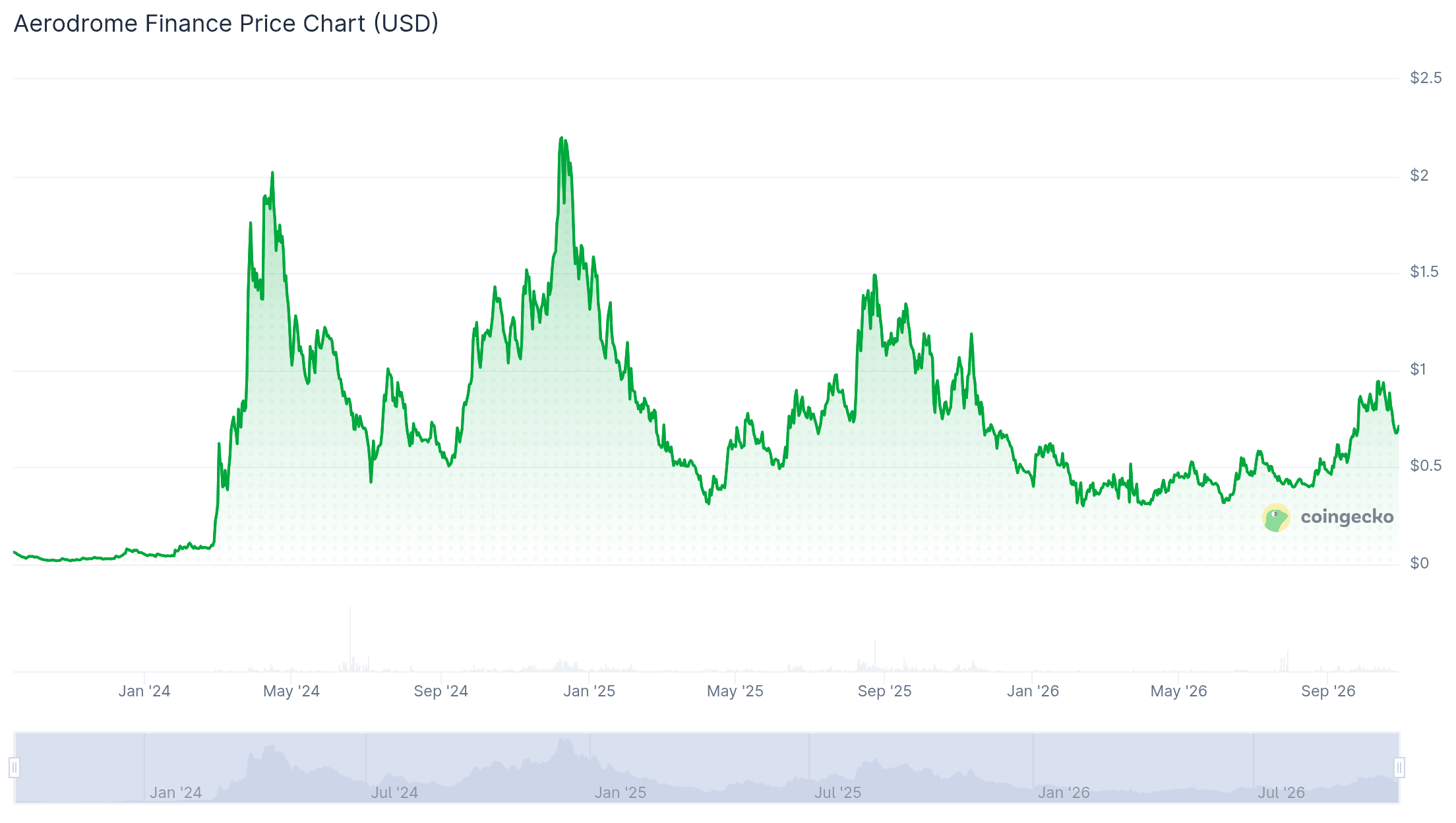
Also, AERO's new model gives sAERO holders a share of revenue from the expanding exchange, alongside the ability to direct liquidity incentives across its networks. UNI, meanwhile, benefits from a fee mechanism that contributes to token burns. Both aim to link token value to exchange activity, but AERO offers exposure to the growth of a newly unified multichain business.
Valuation strengthens the AERO case as well. DeFiLlama's latest snapshot shows Aero generating approximately $7.79 million in protocol revenue over 30 days, compared with $7.35 million for Uniswap. Not a big difference, but note that Aero is able to generate that despite processing only around a quarter of Uniswap's volume.
Who Has the Edge?
Uniswap remains the safer bet on established scale. It has more liquidity, substantially higher trading volume and a well-established brand.
AERO, however, has the more asymmetric growth thesis. It doesn't need to match Uniswap's total volume to deliver a greater percentage return. It needs to expand beyond its Base and Optimism strongholds, grow protocol revenue and convince the market that the combined business deserves a higher valuation.
The bottom line: UNI has the stronger business today, but AERO could outperform if its multichain expansion translates into durable revenue growth and a valuation re-rating.
While we're on the topic of exchanges, there's another newcomer we're keeping a (very) close eye on 👀. Check out our deep dive on Why Polyester Could be DeFi’s Next Breakout DEX.
Want more info like this directly in your inbox? Subscribe to The Beluga Brief where we break down such trends and a whole lot more!
Never be the last to know
and follow us on X
Related Articles
All articles
How KittyPunch Is Making DeFi on Flow Fun Again!
KittyPunch is a full-featured DeFi suite on Flow that offers swaps, yield farming, NFT auctions, a stablecoin DEX, and bridging, all within a single platform.

What Are Smart Contracts?
This article explores the role of smart contracts in revolutionizing digital agreements, highlighting their benefits, challenges and use cases.

Everything You Need to Know About Trump's New Token
World Liberty Financial (WLFI) is a Trump family-led DeFi platform, built on Aave’s protocol and Ethereum’s Layer-2 Scroll network.

All You Need to Know About EigenLayer
EigenLayer allows Ethereum stakers to "restake" their ETH or liquid staking tokens to secure additional networks and earn extra rewards.

What’s Special About $EIGEN & Should You Buy It?
As a restaking protocol built on Ethereum, EigenLayer allows users to leverage their staked Ether (ETH) to secure additional applications, potentially earning more rewards.

How to Earn While Managing your Portfolio with Velvet
Velvet Capital has recently deployed on Base, opening up its user base to a new ecosystem of DeFi from dApps like Aave and Beefy.