If You're Buying the SOL Dip, You Might as Well Earn on It!
By Pratik Bhuyan Updated July 1, 2026

Summary
- Solana is down roughly 75% from its peak but continued ecosystem growth makes it an attractive asset for long term investors.
- Staking SOL helps earn passive rewards while securing the network instead of leaving tokens idle in a wallet.
- Compounding staking rewards over time can meaningfully increase your SOL holdings despite changing network yields.
Introduction
SOL hit $293 back in January 2025. Today it's hovering in the low $70s, down roughly 75% from that top, sitting at a ~$40 billion market cap. Nobody knows where the bottom is. The market could go lower before it goes higher.
But if you've been waiting for a better entry into one of crypto's strongest ecosystems, these levels are hard to ignore. Solana continues to attract developers, stablecoin growth remains healthy, and activity across DeFi, payments, etc. has stayed surprisingly resilient despite the price correction. We've explored this topic in depth in a previous article. You can find it here.
So, if you're going to buy some SOL anyway, leaving it idle in a wallet would be a big mistake. Staking does two things at once: it pays you yield, and it helps secure the network. So the real question is just where to put it.
Here's the rundown on the main native Solana staking options that are worth considering.
1. Jito
If your only goal is maximizing staking returns, Jito is probably the first place to look.
Jito pioneered MEV enabled staking on Solana. Instead of only collecting standard validator rewards, Jito distributes MEV revenue back to stakers, giving users an extra source of yield that traditional staking doesn't capture.
Today, JitoSOL remains one of the largest liquid staking tokens on Solana and consistently delivers among the highest real staking yields. Depending on network activity, returns generally land around the upper end of Solana's staking range thanks to those additional MEV rewards. Community discussions continue to favor Jito for users chasing the highest sustainable yield rather than temporary promotional rates.
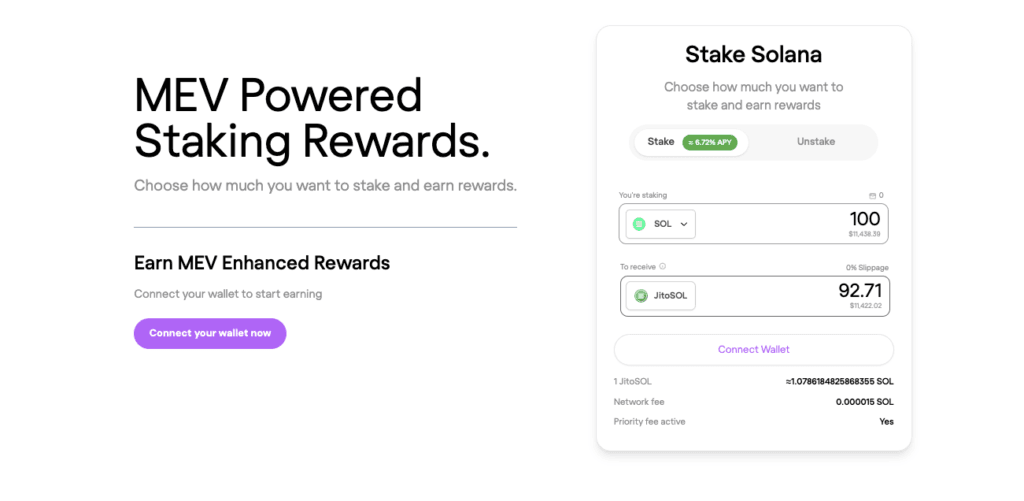
Beyond yield, Jito has become deeply integrated across Solana DeFi. JitoSOL can be used as collateral across major lending and trading protocols, allowing users to earn staking rewards while still putting their capital to work elsewhere.
For most investors, Jito strikes the best balance between yield, liquidity, adoption, and ecosystem support.
2. Marinade Finance
Marinade has been one of Solana's most trusted staking protocols for years.
Rather than relying heavily on a handful of validators, Marinade spreads delegated SOL across more than 100 validators using an automated rebalancing system. That helps improve decentralization while maintaining competitive staking rewards. Recent yields have hovered around the 6% range depending on network conditions.
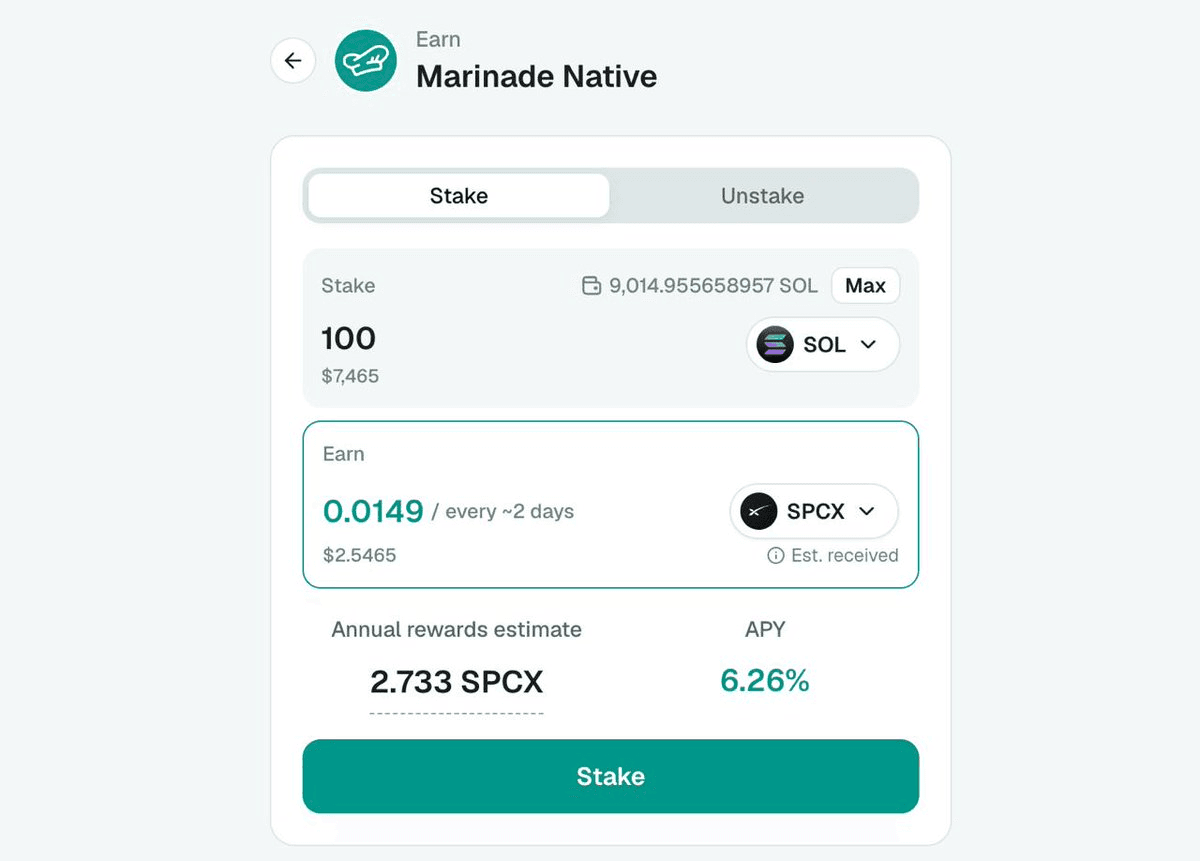
Marinade also offers both native staking and liquid staking through mSOL, giving users flexibility depending on whether they want maximum simplicity or DeFi compatibility.
If your priority is long term reliability and decentralization, Marinade remains one of the safest bets in the Solana ecosystem.
3. BlazeStake
BlazeStake often flies under the radar but deserves far more attention.
The protocol distributes stake across more than 200 validators and is designed with decentralization as a core objective. While its yields are usually slightly below Jito and close to Marinade, the difference is often relatively small over longer periods.
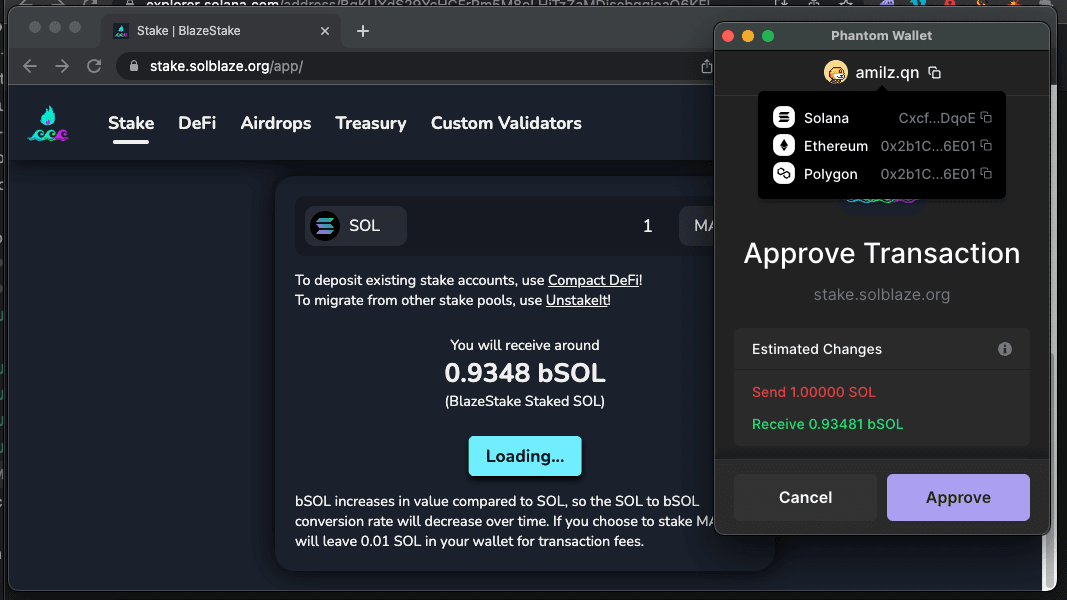
Like the other major liquid staking protocols, BlazeStake issues bSOL, which can be used throughout Solana's DeFi ecosystem while continuing to earn staking rewards.
For investors who care about supporting validator diversity without sacrificing competitive returns, BlazeStake is an excellent alternative.
Which One Looks Strongest Right Now?
If you're optimizing purely for returns, Jito currently stands out.
The combination of standard staking rewards plus MEV distribution has consistently allowed JitoSOL to outperform most traditional staking options over time. On top of that, it has become one of Solana's most widely integrated liquid staking assets across lending, perpetuals, and yield protocols.
Marinade remains the go to choice for investors who prioritize decentralization, while BlazeStake offers another strong decentralized alternative with solid yields.
There is no universally perfect option, but for most users the pecking order today looks something like this:
- Jito for the highest long term yield potential and DeFi integrations.
- Marinade for reliability and validator decentralization.
- BlazeStake for users who want another community driven staking option with competitive returns.
Final Thoughts
If you're bullish on Solana over the next few years, staking is one of the easiest ways to improve your long term returns. You're already taking price risk by holding SOL. Earning an additional 5% to 6% a year may not sound life changing, but over multiple years those rewards compound into a meaningful number of extra tokens.
Just remember that staking rewards fluctuate with network activity, validator performance, and MEV opportunities. The highest advertised yield today may not stay the highest forever. Still, if you're accumulating SOL while the market is well below its highs, letting those tokens earn for you is probably better than letting them sit idle.
If you enjoyed this article and want to learn more about what Solana is building, follow them on X for the latest updates!
Join the Beluga Brief
Dive deep into weekly insights, analysis, and strategies tailored to you, empowering you to navigate the volatile crypto markets with confidence.
Never be the last to know
and follow us on X