Jito’s Big Bet: JTX Could Be Its Biggest Revenue Engine Yet
By Pratik Bhuyan Updated May 22, 2026

Summary
- Jito’s BAM briefly crossed the 33.3% super minority threshold as validator adoption and stake share continued accelerating through Q1 2026
- JTX is shaping up to be JTO’s biggest value driver with 80% of platform fees set to flow directly toward token accrual after launch
- Jito paused buybacks and redirected protocol revenue toward BAM validator subsidies as the team prioritizes long term ecosystem growth
Introduction
Jito just held one of the most polished investor-style calls crypto has seen so far. Full slide deck, forward guidance, hosted Q&A, and leadership walking through the numbers like a public company earnings call.
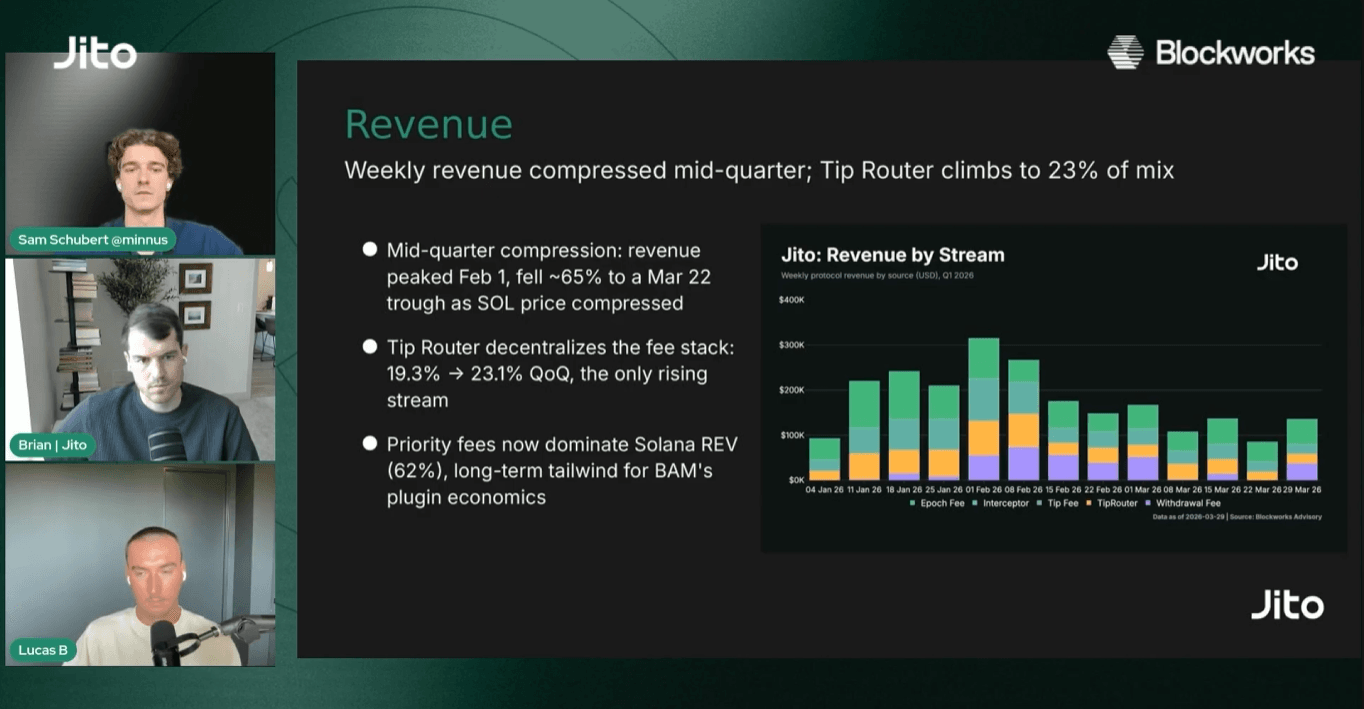
For Q1 2026, Jito reported $2.33M in protocol revenue while processing nearly $19.85M in gross tips. But the bigger story was not the revenue itself. It was how aggressively Jito is positioning itself as Solana’s execution layer.
Between BAM growth, the upcoming JTX launch, and paused buybacks, the team made it clear they are prioritizing expansion over short term token support.
What Is BAM & Why Is It Growing?
At a basic level, BAM, short for Block Assembly Marketplace, is Jito’s system for improving how transactions get ordered and executed on Solana. Instead of transactions fighting each other in a chaotic queue, BAM helps validators and traders coordinate execution more efficiently. That means faster trades, better pricing for users, and fewer opportunities for bots to exploit delays or bad ordering. In simple terms, Jito wants BAM to become the behind the scenes traffic control system for Solana’s trading activity.
And this, Block Assembly Marketplace, is becoming central to Jito’s strategy.
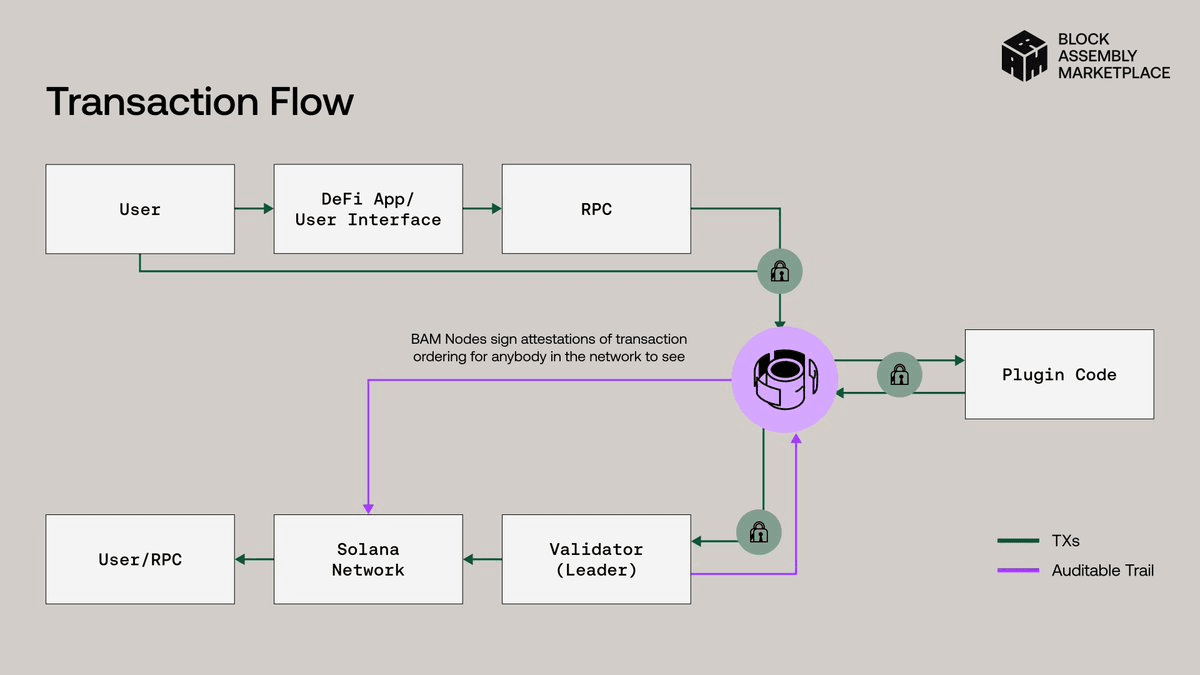
BAM stake share grew from 14% at the start of the quarter to 28.1% by the end of Q1. Since then, it has already climbed to around 31-32%, and briefly crossed the super minority threshold of 33.3% for the first time. Validator count also jumped 56% to 363 validators, with over 119M SOL now staked through BAM validators.
The next big unlock is FireBAM, which allows Firedancer and Frankendancer validators to run BAM. According to CEO Lucas Bruder, it is finally ready for mainnet and could open another ~8% of stake to BAM.
Lucas summed up the company’s philosophy pretty clearly on the call:
“We’re optimizing for Solana to win.”
JTX Could Become JTO’s Biggest Driver
If BAM is the infrastructure play, JTX is Jito's monetization play. JTX got a huge amount of attention during the call, with Jito Foundation president Brian Smith calling it potentially “the most significant value driver for JTO going forward.”
JTX is a self-custodial trading platform built for what Jito calls “pro retail” users. Basically, traders who are actively moving serious money around, somewhere between smaller retail users and full blown whales.
The idea is simple: one interface for spot trading, perps, and eventually prediction markets, all powered by Jito’s own execution infrastructure. JTX launches in early June with spot trading first. Perps will later come through integration with Phoenix.
The important detail here is the fee structure. Around 80% of JTX fees will flow directly toward JTO value accrual, while the remaining 20% goes toward product development.
Buybacks Are Still on Hold
JTO holders hoping for aggressive buybacks are going to wait a bit longer.
Jito burned 9.71M JTO in Q1 alone, bringing cumulative burns to 13.48M tokens. The previous 11M TWAP buyback program also finished in January with 2.15M JTO accumulated. But after JIP-31, protocol revenue stopped flowing into buybacks entirely. Instead, everything is currently going toward BAM validator subsidies.
Brian hinted that a new proposal could extend these subsidies even longer by replacing the planned gradual taper with a hard cutoff later in Q3. The logic from the team is straightforward: if BAM growth creates a stronger long term moat, it is worth sacrificing short term buybacks.
That may not be comforting for holders after JTO dropped 32.5% during Q1, but Jito believes future token value will come more from JTX revenue and future decentralized buyback systems rather than the old model.
JitoSOL Is Holding Share Despite TVL Decline
JitoSOL TVL fell from 11.41M to 9.72M tokens during Q1, a 14.8% decline. Still, its market share stayed strong at 19.2%, comfortably ahead of any individual competitor.
Brian argued the outflows were mostly from long term SOL holders reducing exposure overall, not users rotating into competing liquid staking tokens. On the institutional side, Jito kept expanding distribution. The 21Shares JSOL ETP launched on Euronext in January and grew from $93K to $582K AUM by quarter end. Jito also signed an MOU with Hanwha Asset Management aimed at future Korean ETPs.
Then there is the big one: VanEck. Brian admitted approval timelines for the proposed JitoSOL ETF are now taking longer than expected. Instead of the original 45-90 day expectations, he said investors should not expect approval within the next six to eight weeks.
The Maker Priority Plugin Is Already Working
BAM’s first revenue-generating plugin is already live.
The Maker Priority Plugin gives prop AMMs deterministic sub-slot execution in exchange for fees. Projects like BisonFi, ZeroFi, SolFi, and GoonFi are already using it.
According to Lucas, some market makers are paying between $200K and $500K annually for access because better execution can save them from getting picked off during volatile trades.
Jito plans to expand this plugin ecosystem further with tools like:
- BAM Time for tighter quoting
- Phoenix perps oracle plugins
- Custom JTX execution plugins
The strategy is pretty clear at this point: build critical infrastructure first, monetize later once adoption becomes unavoidable.
The SolanaFloor Acquisition
SolanaFloor was officially acquired by Jito Foundation in March after the site shut down following the Step Finance exploit. Jito says SolanaFloor will remain editorially independent while receiving additional funding and support.
The move could give Solana a much larger media platform just as the ecosystem pushes deeper into areas like tokenized stocks, commodities, and RWAs.
Wrapping Up
The clearest takeaway from the call was that Jito is fully focused on long-term positioning over short-term optics. BAM is growing quickly. JTX is about to launch. Institutional interest around JitoSOL keeps building.
At the same time, there are still obvious risks. JitoSOL TVL is declining, JTO had a rough quarter price-wise, BAM monetization is still early, and ETF approval timelines are slipping. For now, Jito is basically asking holders to wait through one more transition phase before the full monetization story kicks in.
The next few months are going to matter a lot. JTX launches in June, while BAM subsidies end in Q3. The VanEck decision comes sometime after that. If those pieces fall into place, Jito’s “Market Layer” thesis could start looking a lot more real.
Join the Beluga Brief
Dive deep into weekly insights, analysis, and strategies tailored to you, empowering you to navigate the volatile crypto markets with confidence.
Never be the last to know
and follow us on X