Why Polyester Could be DeFi's Next Breakout DEX
By Pratik Bhuyan Updated September 24, 2026

Summary
- Polyester unifies spot liquidity across multiple blockchains, making cross-chain trading simpler and more seamless.
- Its order book and sub-millisecond matching engine deliver faster execution with a CEX-like trading experience.
- Trading stays private while reserves and asset backing remain fully transparent onchain.
Introduction
There was a time when choosing a DEX was simple. You picked one on Ethereum, another on Solana, maybe a different one on Base, and that was pretty much it. Fast forward to today, and crypto has become a multi-chain ecosystem. And now, every other week, there's a new protocol promising deeper liquidity, lower fees, or a faster matching engine. After a while, most of them start sounding the same.
Polyester is one of the few that actually made me stop and dig deeper. After spending some time going through how it's built, it becomes pretty clear that Polyester isn't trying to be another Uniswap or another Hyperliquid. It's trying to blur the line between centralized exchanges and DeFi by keeping what works from both worlds while cutting out a lot of the compromises we're used to making.
One unified balance across multiple blockchains
One thing that immediately stood out was how Polyester handles liquidity.
Normally, assets on different chains stay trapped on those chains. USDT on Ethereum isn't really the same as USDT on Solana when you're trading. You have to bridge, wait, pay fees, and often lose access to liquidity along the way.
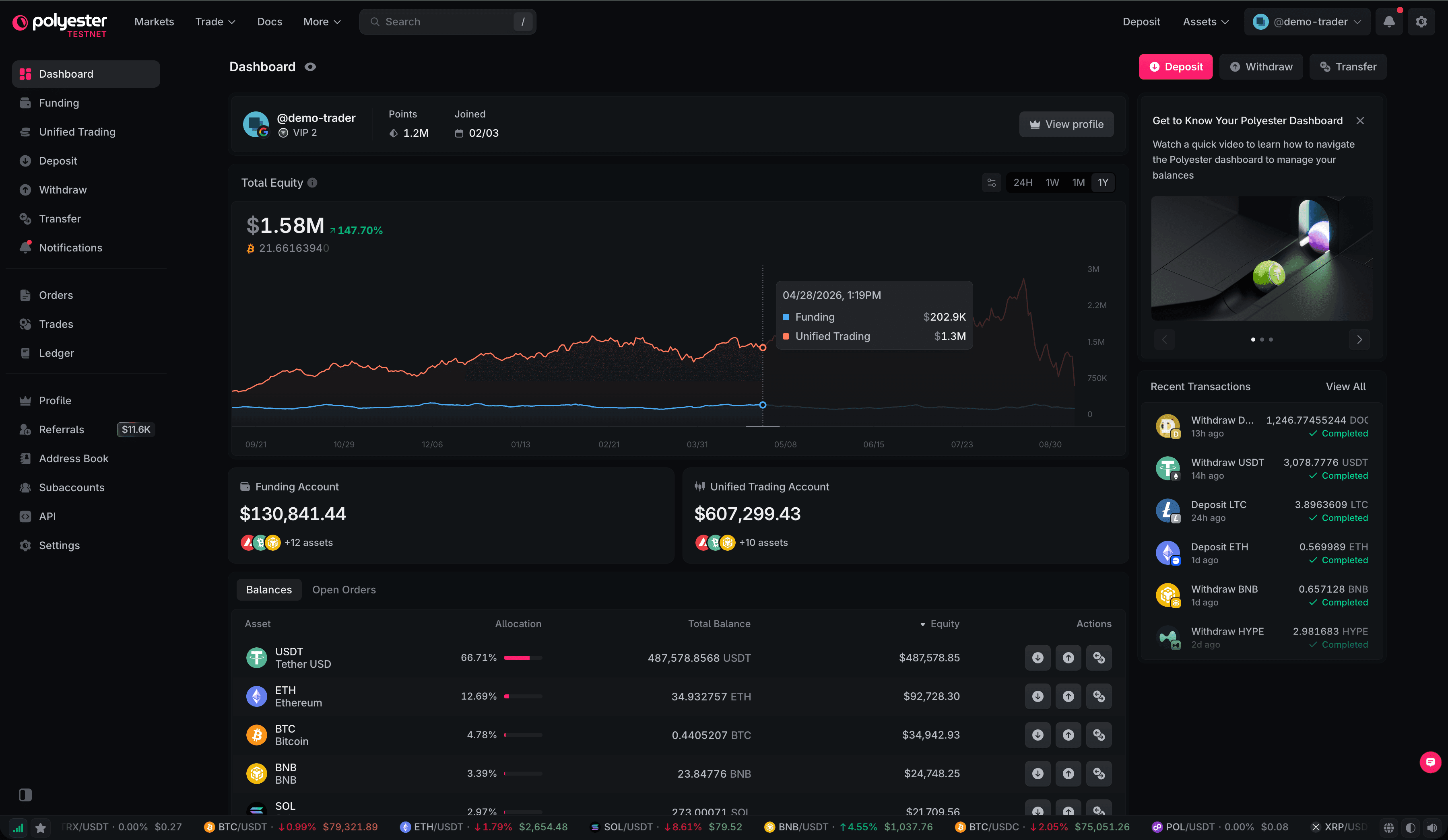
Polyester approaches this differently with something called Zipper, developed internally by the team. Native assets from supported chains are wrapped into "Zipped Assets" that remain fully backed 1:1 by the original asset. Once they're inside the Polyester ecosystem, liquidity from different chains gets unified into a single trading environment instead of being split across dozens of isolated pools.
Deposit ETH from Base, withdraw it to Arbitrum seconds later, no fragmented bridge liquidity in the middle. The result is that you're thinking less about which chain your funds are on and more about simply placing trades.
They support deposits and withdrawals across virtually every major blockchain, from Bitcoin, Ethereum, Solana, Base, Hyperliquid, and XRP to networks that most exchanges overlook, including Ethereum Classic, Litecoin, Bitcoin Cash, Dogecoin, Tron, and more.
It trades like a centralized exchange
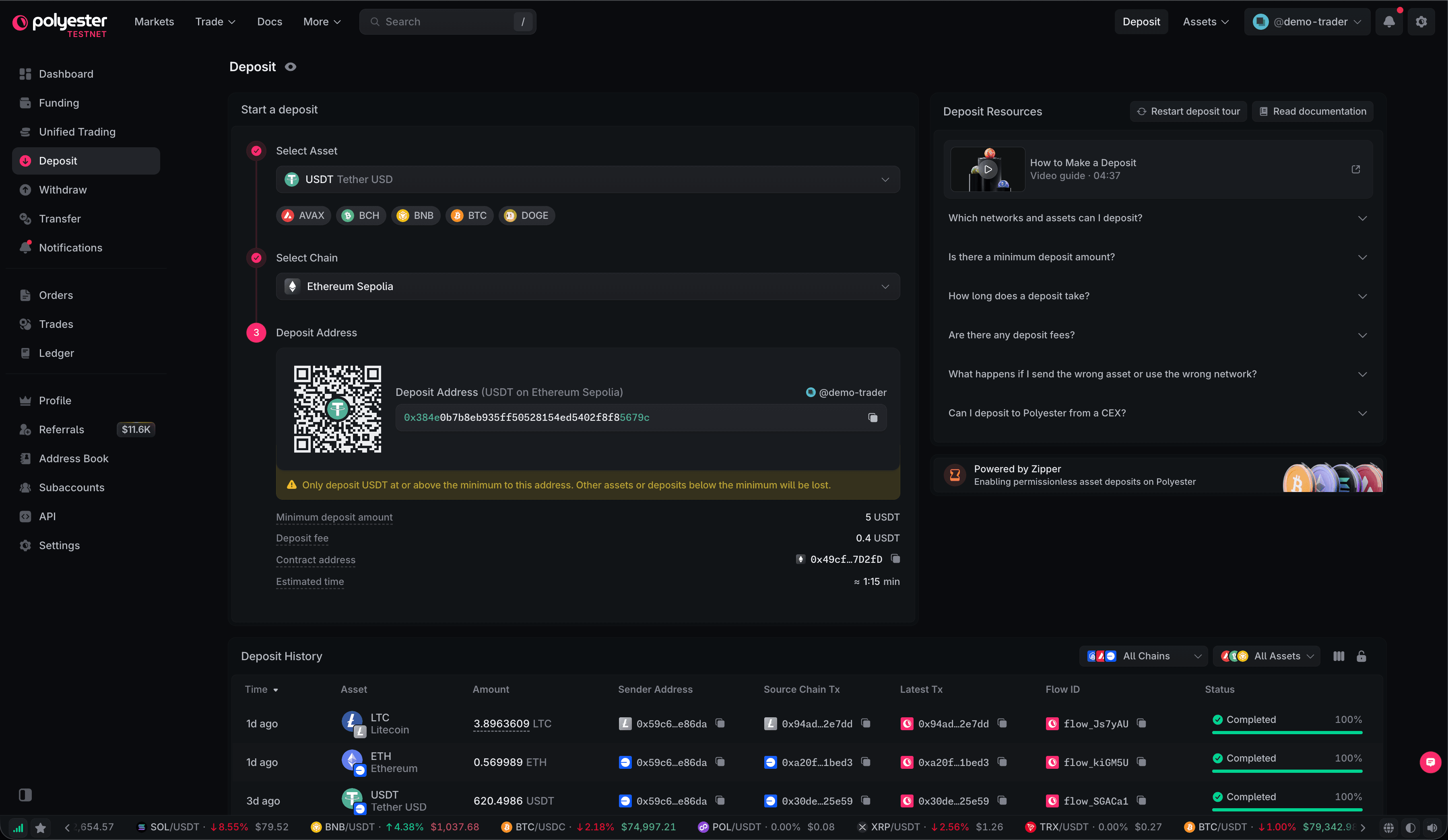
If you've been in DeFi for a while, you probably know what AMMs are. If not, check out this quick guide. Now, most DEXs rely on AMMs. But Polyester doesn't. Instead, it uses a genuine order book with a sub-millisecond matching engine while your funds remain verifiable and non-custodial.
That means limit orders, tighter execution, sub-millisecond matching, and an experience that's much closer to trading on a CEX than interacting with a liquidity pool. If you've ever wished DeFi felt less like fighting slippage and more like actual trading, this is where Polyester starts to feel different.
Orders are processed by the off-chain matching engine that can handle over 1M TPS for each trading pair, with less than 1 millisecond of delay. Every market has its own dedicated engine, so performance stays fast even during heavy trading.
Privacy without sacrificing transparency
One of the more interesting design choices is how Polyester separates trading privacy from asset transparency.
Your balances, positions, and strategies aren't publicly exposed during trading, helping reduce issues like surveillance or liquidation hunting. At the same time, deposits, reserves, withdrawals, and asset backing remain publicly verifiable on-chain through Polyester Scan.
In our view, this is a real standout feature because many platforms struggle to get it right.
Built for both retail & serious traders
A lot of platforms either focus entirely on retail users or go all-in on institutions. Polyester tries to serve both.
It's also capital efficient in the way traders actually like. Idle balances and even your resting spot orders count as collateral, so the same capital can back a lending position and provide liquidity at the same time. Lending is native and pooled rather than bolted on, with fixed-term order-book lending sitting next to variable-rate markets.
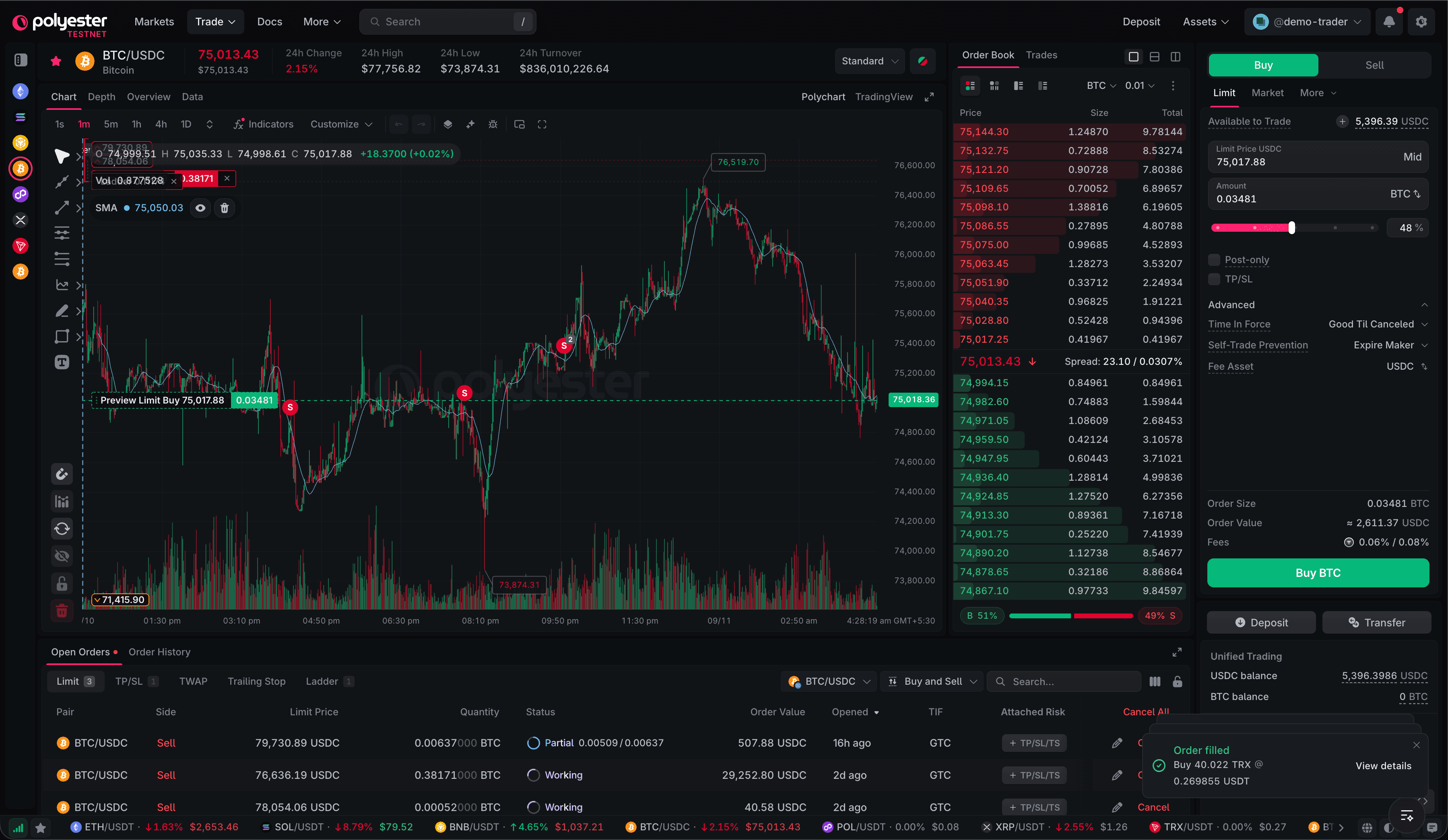
Sub-accounts can share collateral, and you get withdrawal whitelists, configurable daily limits, and live progress tracking on deposits and withdrawals, the kind of plumbing DEX users almost never get.
Why Polyester is worth watching
If we had to describe Polyester, it would be this:
It feels less like someone tried to decentralize a centralized exchange, and more like someone rebuilt an exchange from scratch using the best parts of both worlds.
Whether their vision plays out exactly as planned remains to be seen, but the underlying ideas are genuinely interesting. Unified cross-chain liquidity, permissionless native deposits, institutional-grade orderbook infrastructure & integrated lending aren't features that usually exist together on the same platform.
A platform this impressive deserves to be put to the test, which is why we're teaming up with Polyester for an upcoming trading contest packed with exciting rewards! Be sure to follow @heybeluga and @polyester on X so you don't miss the contest announcement and all the latest updates!
Join the Beluga Brief
Dive deep into weekly insights, analysis, and strategies tailored to you, empowering you to navigate the volatile crypto markets with confidence.
Never be the last to know
and follow us on X